Anxiety Therapy in London
At Therapy Central, we offer anxiety therapy and counselling in London and online for people struggling with worry, panic, fear, avoidance, physical symptoms of anxiety or feeling constantly on edge. We’ll help match you with a qualified therapist who can use CBT and other evidence-based approaches to understand what keeps anxiety going and build practical ways to manage it. You can request a free 15-minute consultation to talk through what support might fit.
Work with our qualified anxiety therapists today.
Request a free 15min consultation
Discover Anxiety & Anxiety Therapy
What is Anxiety? Is it always ‘bad’?
Anxiety therapy is not always needed. This is because experiencing anxiety is normal: it is one of the many emotions we are equipped with since birth. In small doses and in the appropriate situation, this emotion can be very useful for us. For example, being anxious about an upcoming presentation will (hopefully) motivate us to prepare for it and do well. However, some people experience heightened levels of anxiety that can be debilitating and it can have a significant impact upon their lives. Experiencing high levels of anxiety is a common problem which can develop in childhood or adulthood. Read more in our blog post about What is anxiety? How to manage it?
The Various Types of Anxiety Issues
Anxiety is actually a term used for a number of specific anxiety disorders. Including the following:
- Generalised Anxiety Disorder (GAD). In GAD, we experience frequent and chronic worries about events that are unlikely to happen
- Panic Disorder. Here is where we experience Panic Attacks: sudden and intense reactions of terror accompanied by strong physical symptoms (increased heart rate, hyperventilation, dizziness etc.). Usually, there is an unreasonable fear of dying or losing control.
- Obsessive-Compulsive Disorder (OCD). In OCD, anxiety is experienced due to intrusive thoughts or images, often accompanied by rituals (compulsions), which temporarily calm anxiety and fears.
- Post Traumatic Stress Disorder (PTSD). In PTSD, anxiety is triggered by reminders or other factors linked with a traumatic event we experienced.
- Social Phobia/Social Anxiety. In social anxiety, the negative feelings are triggered by social situations and linked with the fear of others evaluating us negatively.
- Specific Phobia (such as a phobia of spiders, lifts, planes etc.). With phobias, anxiety is usually triggered by a specific object or situation, which provokes intense fear.
- Health Anxiety (Hypochondria). In health anxiety, there is an excessive, unreasonable worry about having a severe illness or disease. This fear is usually maintained despite medical reassurance.
What are the Signs and Symptoms of Anxiety?
People asking for help with anxiety therapy or counselling tend to often experience excessive worry about a range of things such as finances, relationships, health, work and school. Whilst everyone worries from time to time, those with high anxiety levels, like those with GAD, can experience worries as being relatively uncontrollable, distressing and persistent. People with high anxiety levels may also face discrete ruminating periods, which lasts from a few minutes to hours.
High anxiety levels often involve the following Cognitive and Emotional symptoms:
- Feeling overwhelmed
- Feeling on edge
- Restlessness
- Difficulties concentrating
- Difficulties making decisions
- Irritability
- Strongly disliking uncertainty
- The sense of not being in control
People can often experience unpleasant physical symptoms associated with their anxiety, such as:
- Nausea
- Poor or increased appetite
- Headaches
- Fatigue
- Muscle aches and pains
- Increase in heart rate/palpitations
- Quickened and shallow breathing
High anxiety levels can significantly affect our sleep. There may be difficulties falling asleep, staying asleep and have less refreshing sleep. When working with an anxiety counsellor, one of the most important short term goals is to reduce the frequency and intensity of your symptoms to start to feel more in control of your life.
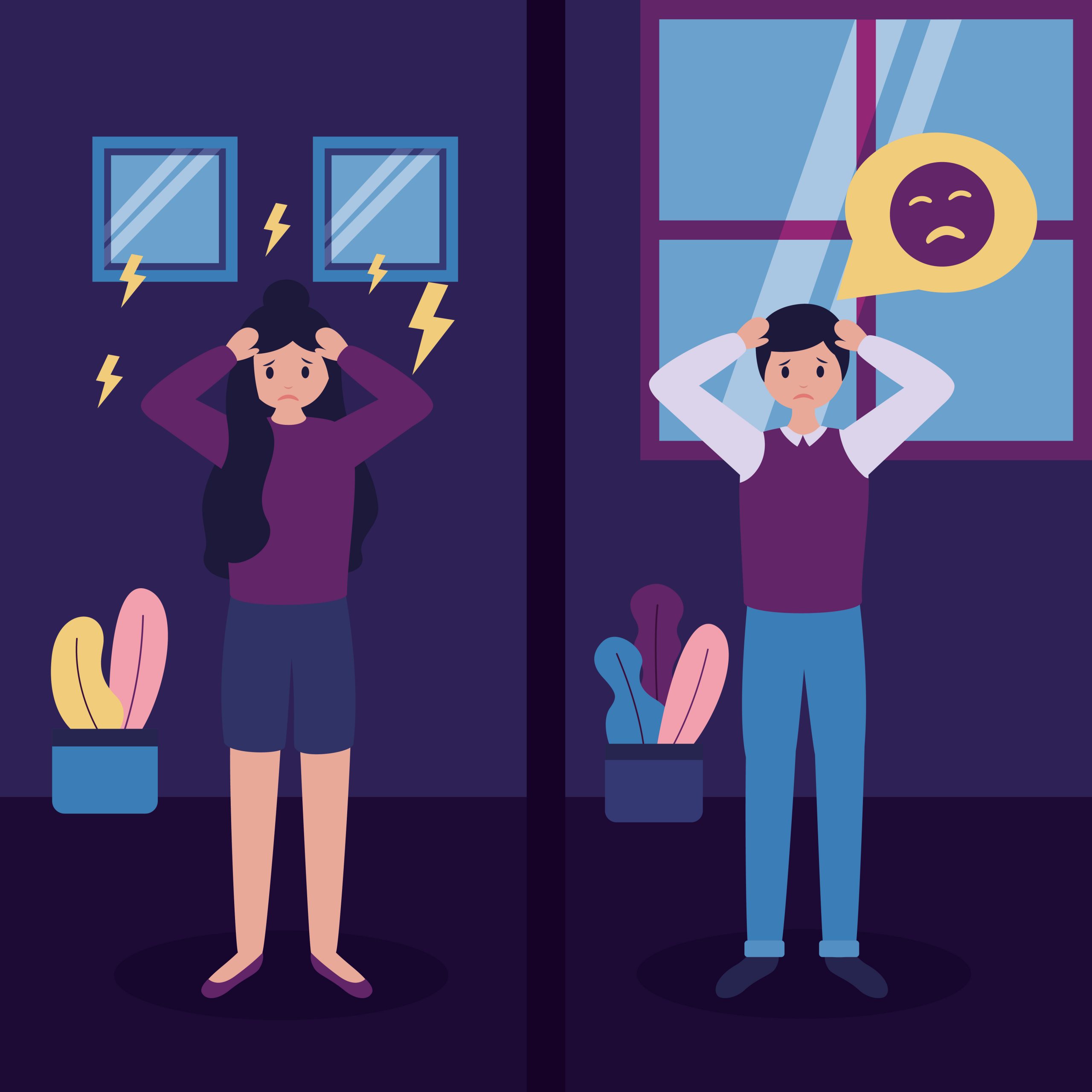
Why is Anxiety Maintained?
There are very clear reasons why anxiety often does not go away on its own. For example, people experiencing anxiety problems may try to fight their worries by over-planning, being overly organized, avoiding worrying situations and seeking reassurance from those close to them that they are safe and well. This is because they can tend to overestimate the likelihood of the worst-case scenario happening. To further add to worry, people may have a heightened sense of responsibility. Therefore they believe that if something bad were to happen, it would have been largely their fault.
Many people with anxiety can also face other mental health issues alongside it, such as depression. People often believe that there are benefits of worrying to the extent that they do and that the cost of not doing so provides good reason to continue worrying. This can make it difficult for people to let go of their worries and reduce their measures to prevent their fears from occurring. As well as holding positive beliefs about worrying, some people may also hold negative beliefs about worrying where they worry about their worrying. They can fear that their worries are out of control, that worrying to the extent that they do is harmful, that they may go crazy with worrying and that the worry will take over and control them. Although these strategies make sense as they’re devised to move away from, reduce or remove our fears, they are, in fact, counterproductive. In turn, these strategies serve to raise anxiety levels! See below an example of a CBT anxiety cycle that would be an early target in anxiety therapy.
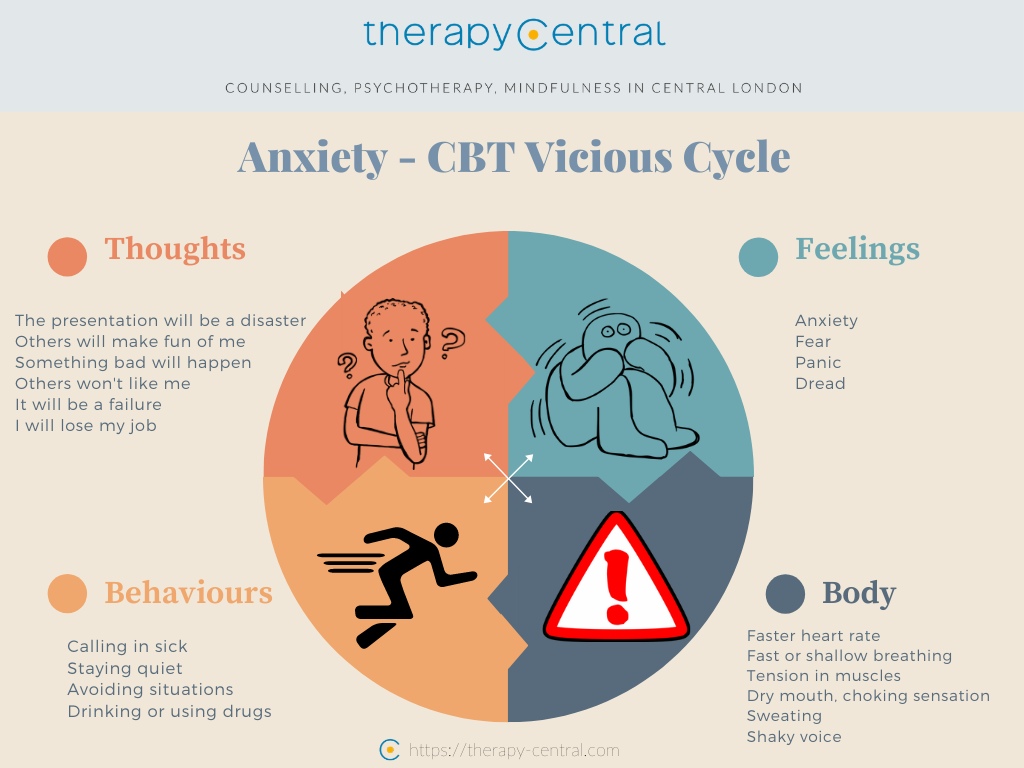
What Causes an Anxiety Problem?
There is not one single cause of an anxiety disorder, but rather, there is a range of factors that can make it more likely that an individual will develop significant difficulties requiring anxiety therapy, including:
- Adversity in childhood
- High-stress levels
- Growing up with highly anxious parents or relatives
- Substance abuse
- A very stressful/traumatic event
- The break-up or loss of an important relationship
- The loss of a job
Do I need Anxiety Therapy?
To understand if our anxiety is an issue to look at with an anxiety therapist, it’s enough to ask ourselves how and to what extent our life has changed as a result of anxiety. If you have stopped going to social events, meeting family and friends, or if you have lost a relationship, a job, or have started avoiding certain situations or activities for fear of having an anxiety or panic attack, you should ask for professional help.
As mentioned above, although it only makes sense to want to avoid unpleasant feelings (and the circumstances we anticipate would trigger them), consistent and continued avoidance actually increases our anxiety in the long term. This, in turn, will have the inevitable effect of preventing us from enjoying a fulfilling life. At Therapy Central, our expert anxiety counsellors help individuals who experience mild to severe levels of anxiety. If you are experiencing anxiety and struggling to manage it, it affects your life, and you would like to find ways to manage it better, then it can help you seek counselling, therapy, or CBT for anxiety.
When anxiety is maintained by avoidance, checking or reassurance-seeking, your therapist may suggest ERP therapy or other exposure-based CBT strategies.
Does Counselling, Therapy for Anxiety Work?
Yes, there is a large amount of evidence that psychological and talking therapies are effective in treating anxiety [1]. Well-documented enduring effects exist that therapy and counselling improve anxiety disorders and reduce their cognitive and emotional symptoms [2]. CBT Therapy for anxiety is one of the approaches with the strongest proven evidence. It is also the treatment most of the Therapy Central anxiety therapists use to work with anxious clients.
At Therapy Central we have helped many people who struggle with anxiety and enabled them to better manage it and reduce the impact it has upon their lives. Our anxiety therapists draw upon therapy approaches that are shown to be effective, such as CBT (discover How Counselling, Psychotherapy and CBT Therapy work). Our therapists work integratively, meaning they have knowledge and experience of various therapy models and will draw upon the ones (whether that is CBT for anxiety or other therapy models) that they think will be helpful for you.

Anxiety Therapy: What Does It Involve?
Therapy for anxiety may involve helping you to explore the pros and cons of worrying to the extent that you do. You may be helped to challenge your thoughts and perhaps try not to engage with them but instead to let them go. An important aspect of therapy is often helping you accept that you cannot have full certainty and control over your thoughts and worries and to let go of striving for this. The behaviours you engage in, which result from your worries, will be explored, and some of them will be a target for change.
You may learn that they are feeding into your anxiety, and it may help make adjustments to them. For example, it can be fruitful to test out our worries and face our fears. This may sound daunting; however, with your anxiety counsellor or therapist’s support, you can identify what adjustments would be helpful to make and put these into play in a gradual way. Therapy will be tailored around your specific needs by a highly trained anxiety therapist.
What are the Benefits of Counselling For Anxiety?
Therapy for anxiety can help you to better manage it and take control back from anxiety. You will be helped to learn concrete skills and techniques to cope with anxiety. People find that the psychological and physical symptoms of anxiety decrease and anxiety reduces its impacts on their lives. Because anxiety issues are very treatable, you will find that your symptoms will be greatly reduced or eliminated after a few months of therapy. Therapy for anxiety can help you take the steering wheel back and head in the direction you want to go towards in life without feeling held back by the anxiety monster.
Our therapists specialised in Anxiety
All of our therapists are qualified psychologists, psychotherapists or counsellors registered with several professional bodies. These include the Health and Care Professions Council (HCPC), the British Psychological Society (BPS), as well as, BACP, UKCP and BABCP.
Our therapists use CBT (Cognitive Behavioral Therapy), psychodynamic, humanistic and integrative approaches tailored around your needs to help you deal with your unique challenges and reach your goals.











Testimonials
⭐⭐⭐⭐⭐
The Therapist l had was absolutely brilliant with me. He had patience with me and bit by bit l gained a little of confidence to try and get out and go on the buses.
He deserves an award and if l could l would in the beginning l thought how is this person going to get me back on public transport but he did he gave me the confidence l lost and now have back.
I will never forget him and what he has done for me. I wish him nothing but the best in his life.
(Patricia)
⭐⭐⭐⭐⭐
My therapist was excellent. I highly recommend her and I am truly thankful for my sessions, I left feeling confident and positive.
The mental tools, systems and approaches I have been able to develop with her and use in my life have been hugely beneficial.
Thank you to all at Therapy Central.
(John)
⭐⭐⭐⭐⭐
The Therapist really gave me the space to talk and express my feelings and fears in a very comforting environment.
She was there not only to listen, but challenge my thinking, guide me during the uncertainty I was experiencing and give me useful and practical tips to improve my mental health and wellbeing. Highly recommended!
(George)
⭐⭐⭐⭐⭐
Working with the therapist has been a life-changing experience. Each session has been invaluable, helping me gain a good understanding of CBT methodology enabling me to incorporate ways to combat stress and anxiety in my daily life.
The Therapist shows that she really cares and has the ability to make you feel calm whilst discussing any personal issue.
(Richard)
Fees & Insurances
Therapy, Counselling and CBT sessions are 50 minutes long and are usually held at regular weekly time slots.
Free
15 Minute Initial
Phone Consultation
£85 - £145
Psychological Therapy/
Counselling (Self-funded)
£120 - £175
Couples Therapy/
Family Therapy
Covered by
Your Private Healthcare Insurance Provider
Anxiety Therapy, Counselling & CBT in London & Online
If you are looking for anxiety therapy in Central London, at Therapy Central we can help you learn the strategies you need to start taking back control from your anxiety. With anxiety therapy you’ll be enabled to make the crucial changes to bring balance and fulfilment back into your life.
It’s not easy to recognise that you might have an anxiety issue, but anxiety is extremely common, and it’s not your fault to experience it. You don’t have to face anxiety alone. Start managing it with an anxiety therapist in London today. Our therapists have many years of experience in helping clients with anxiety.

Anxiety Therapy FAQs
What type of therapy is best for anxiety?
Cognitive Behavioural Therapy (CBT) is one of the most commonly recommended therapies for anxiety, because it helps you understand the thoughts, behaviours and avoidance patterns that keep anxiety going. Some people also benefit from mindfulness-based approaches, compassion-focused work, exposure-based strategies or broader talking therapy. Your therapist should help you choose an approach that fits your symptoms, goals and pace.
Is anxiety therapy the same as anxiety counselling?
People often use anxiety therapy and anxiety counselling to mean similar things: talking with a trained professional about anxiety and how it affects your life. In practice, therapy may be more structured and skills-based, especially when CBT is used, while counselling can also include space to understand feelings, stress and life context. The right fit depends on what you want help with.
How many sessions of anxiety therapy will I need?
There is no fixed number of sessions for anxiety therapy. Some people use a short focused block to work on a specific problem, while long-standing anxiety, panic, avoidance or several overlapping difficulties may take longer. Your therapist should review goals and progress with you, explain the treatment plan, and adapt the work if something is not helping.
Can anxiety therapy help with physical symptoms or panic?
Yes, anxiety therapy can help when anxiety shows up physically, such as a racing heart, breathlessness, tension, dizziness, nausea or panic attacks. Therapy does not replace medical advice, so new or worrying physical symptoms should be checked with a GP or appropriate medical professional. When anxiety is part of the pattern, therapy can help you understand triggers and reduce fear-driven responses.
Can I have anxiety therapy online as well as in London?
Yes. Therapy Central offers anxiety therapy in London and online, depending on therapist availability, your preferences and what is clinically appropriate. Online therapy can work well for many people, especially when regular travel is difficult or anxiety makes attending in person harder. Some clients prefer in-person sessions, while others use online sessions throughout or combine both where possible.
What is private anxiety treatment in the UK?
Private anxiety treatment means arranging therapy outside the NHS, usually by contacting a private therapy provider directly or using private health insurance. It can offer more choice around therapist fit, appointment times, online or in-person sessions and therapy approach. At Therapy Central, you can request a free 15-minute consultation so we can understand what you need and help match you with a suitable therapist.
Can I use health insurance for anxiety therapy?
Many clients use private health insurance for therapy at Therapy Central. Whether you can use insurance depends on your policy, authorisation requirements and therapist match. We work with several major providers, and you can tell us when you enquire if you plan to use insurance. We can then explain the practical steps and help check whether an appropriate therapist is available.
When should I consider speaking to an anxiety therapist?
It may be worth speaking to an anxiety therapist if worry, fear, panic, overthinking, avoidance or reassurance-seeking is affecting your work, relationships, sleep, confidence or day-to-day choices. You do not need to wait until things feel unbearable. A therapist can help you understand what keeps anxiety going and build practical ways to respond differently.
Our Practice in Central London
Our comfortable and confidential therapy rooms are conveniently located 3 min walk from Oxford Circus station, in Central London (see map below). Change starts with Talking!
Learn more about anxiety
What is anxiety? How to manage it?
What to Do If Anxiety Is Ruining Your Life
CBT for Anxiety: Survival Guide
Anxiety Self-Help
Anxiety: Looking after yourself
Mind Anxiety and Panic attacks help
American Psychological Association: How therapists Help with Anxiety Disorders.
References
[2] Bandelow, B., Sagebiel, A., Belz, M., Görlich, Y., Michaelis, S., & Wedekind, D. (2018). Enduring effects of psychological treatments for anxiety disorders: meta-analysis of follow-up studies. The British Journal of Psychiatry, 212(6), 333-338.
[1] Mangolini, V. I., Andrade, L. H., Lotufo-Neto, F., & Wang, Y. P. (2019). Treatment of anxiety disorders in clinical practice: a critical overview of recent systematic evidence. Clinics, 74.
Authors:
Dr Raffaello Antonino, Counselling Psychologist
Dr Amy Smith, Counselling Psychologist
Image Credits:
People vector created by gstudioimagen – www.freepik.com
People vector created by gstudioimagen – www.freepik.com
Business vector created by pikisuperstar – www.freepik.com
Attribution “run away icon”: Dillon Arloff, from The Noun Project