
Supporting someone with low self-esteem can feel delicate. You may want to help, but worry about saying the wrong thing, perhaps sounding patronising, or becoming responsible for how they feel. The aim is not to rescue them, but to offer steady support while keeping healthy boundaries.
How do you help someone with low self-esteem?
To help someone with low self-esteem, listen without judgement, take their feelings seriously, name specific strengths or efforts, and encourage small steps they can choose for themselves. Try not to rush into fixing, flood them with praise, or make their self-worth your responsibility.

Introduction
Self-esteem is how someone values and sees themselves, and low self-esteem can affect mood, relationships, confidence, and daily life [1]. Practical self-esteem work often starts with noticing self-critical beliefs and trying small, believable changes over time [2]. When you care about someone who is struggling, it can be hard to know whether to reassure them, challenge the thought, give advice, or simply stay with them. This guide focuses on what you can say, what to avoid, and how to offer support without taking over their self-worth.
What do you say to someone with very low self-esteem?
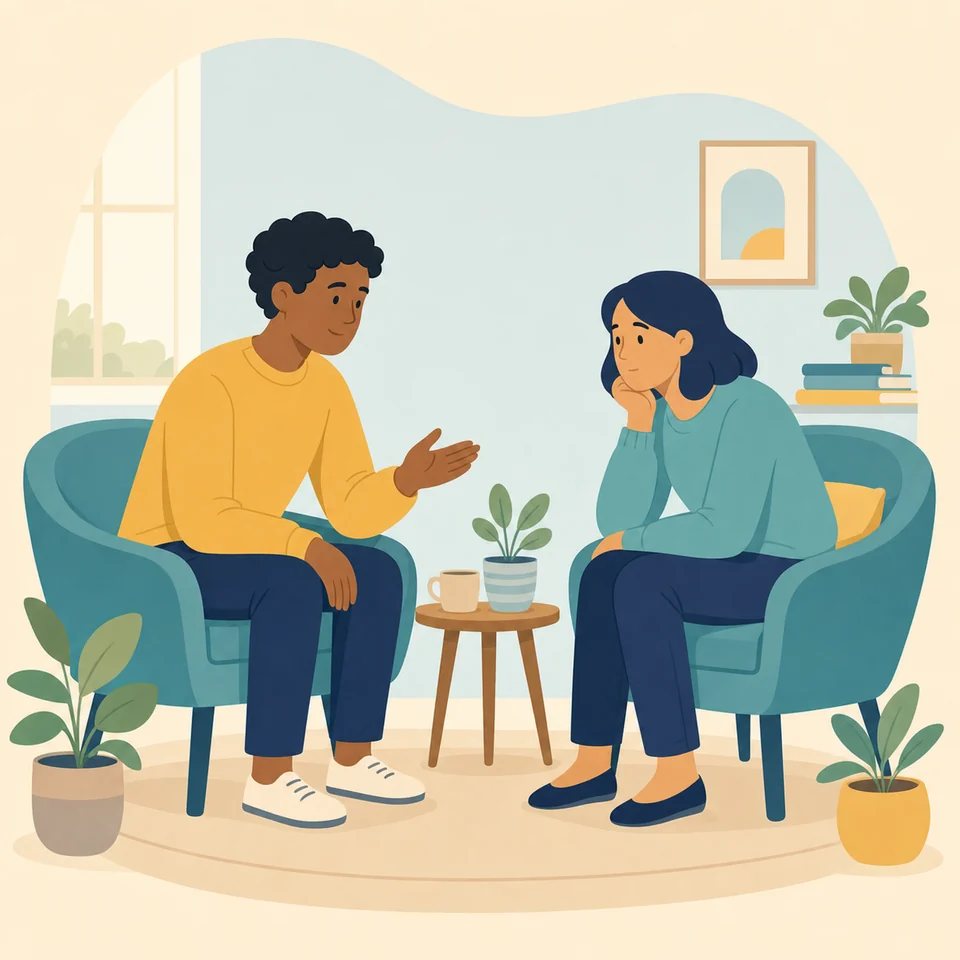
Use calm, specific language that shows you are listening, rather than trying to argue with them about how they feel. If they say something harsh about themselves, it can be tempting to rush in with reassurance, but vague praise may be hard to believe. You might say, “I’m glad you told me”, “I can see this feels heavy”, or “What do you think would be helpful right now?” If you offer encouragement, make it concrete: “To be fair, I noticed how carefully you handled that conversation” will usually land better than “you are amazing”.
What not to say to someone with low self-esteem
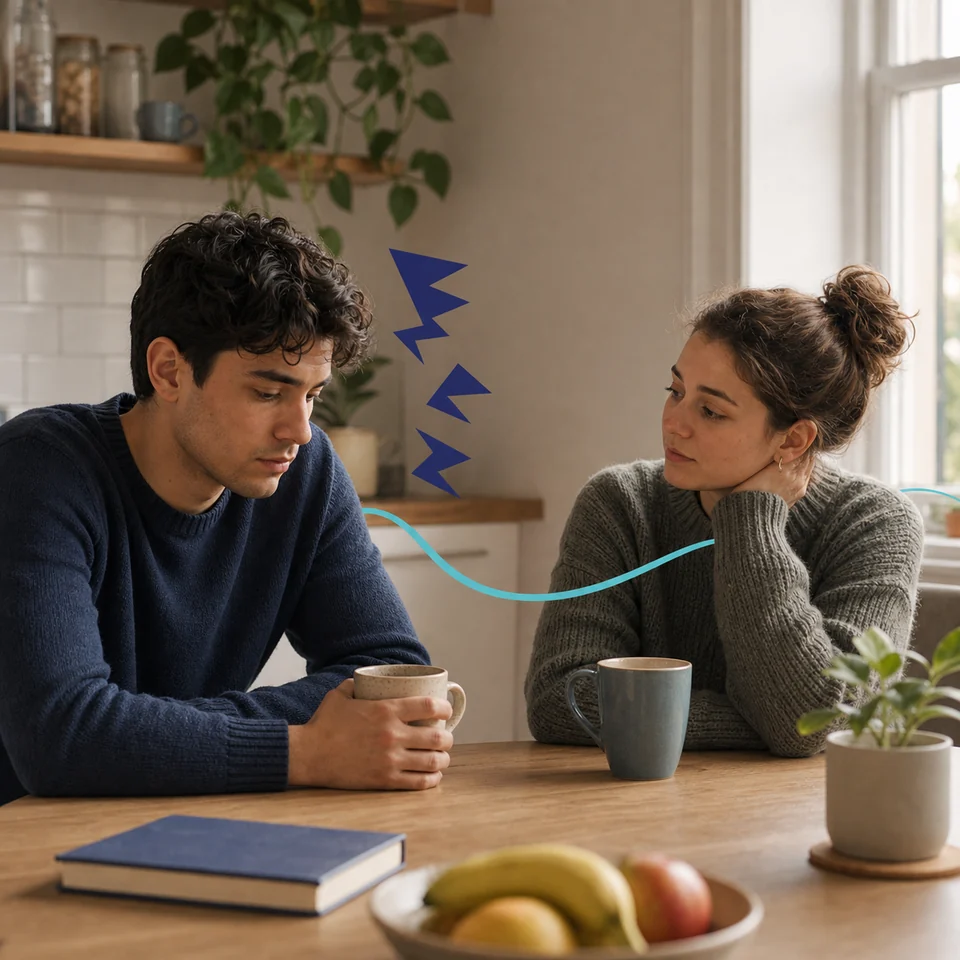
- Do not dismiss their emotions. Comments like “don’t be silly” or “everyone feels like that” can make shame feel worse.
- Do not flood them with praise. Big compliments may feel unbelievable or patronising when someone is already self-critical.
- Do not give advice before asking. Try “Would you like ideas, or would listening help more right now?”
- Do not make their self-esteem your responsibility. You can support them, but you cannot do the inner work for them.
- Do not shame setbacks. Confidence often grows slowly, and setbacks are not proof that your support has failed.
6 practical ways to support someone with low self-esteem
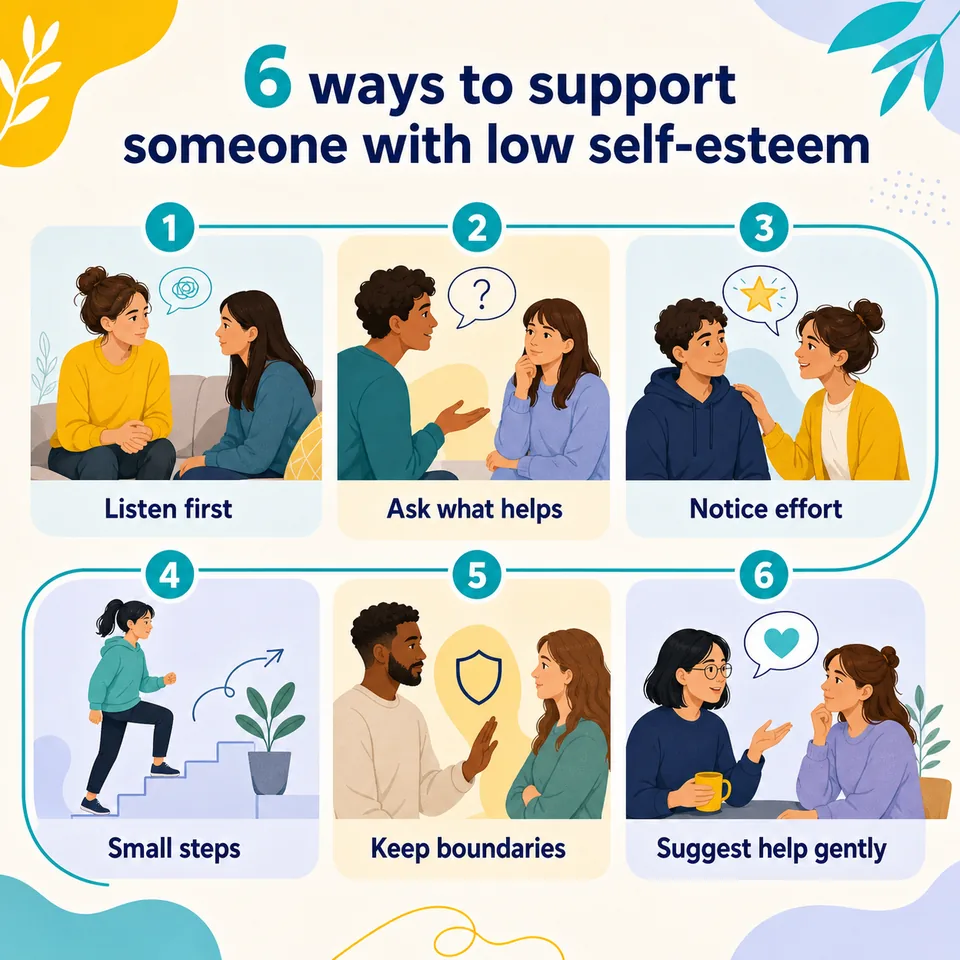
- Listen before you advise. It can be tempting to correct the self-critical thought straight away, especially when it sounds unfair. But first, give them enough room to say what is happening, without having to defend why they feel that way.
- Ask what kind of support they want. Sometimes they may want reassurance. Sometimes they may want help thinking through a problem. Sometimes they may just need you to sit with them for a bit, without trying to turn the feeling into a solution.
- Name effort and strengths specifically. Broad praise can be hard to believe when someone already feels negatively about themselves. It often helps more to point to something real: a choice they made, a difficult conversation they had, or the way they kept going when things felt heavy.
- Encourage small, chosen steps. Low self-esteem can make even ordinary decisions feel loaded. You can help them find one manageable next step, but try to leave the choice with them. That matters, because confidence grows through agency, not pressure.
- Keep healthy boundaries. Supporting someone does not mean becoming responsible for proving their worth to them. If reassurance becomes constant, or you feel you have to rescue them from every painful thought, the pattern can quietly become exhausting for both of you.
- Suggest professional help gently when needed. If low self-esteem is affecting their mood, work, relationships, or daily life, therapy can offer a steadier place to understand where those beliefs came from and practise responding to them differently.
Signs that someone may have low self-esteem
Although low self-esteem is not considered a mental illness like depression, it can have a significant impact on your thoughts, behaviour, and emotions. In turn, this lack of self-worth and value can have a deeply negative effect on your relationships and your overall quality of life and well-being. Here are some signs and symptoms that you or your loved one might be struggling with low self-esteem [3].
- Poor confidence. Low self-esteem is usually closely linked with low self-confidence. Lacking confidence in your day-to-day life may hinder or challenge you when navigating new situations, people, or places. This can lead to increased feelings of anxiety or stress, often reinforced by a critical inner voice.
- Negative social comparison. Someone with lower self-esteem is more likely to engage in upward social comparison, a tendency to compare themselves with people they think are ‘better’ than them. Although this type of social comparison is not always negative, as it can also be inspiring, if you are left with feelings of inadequacy or worthlessness, this can greatly impact one’s self-esteem.
- Difficulty asking for what you need. Someone with low self-esteem may struggle to ask for things they need out of fear or embarrassment. In some instances, they may feel as though they don’t deserve help and don’t prioritise their own needs/desires.
- Trouble accepting positive feedback. Because they don’t view themselves positively, people with low self-esteem are often also unable to accept or benefit from compliments given by others. Positive feedback is usually met with distrust or feelings of anxiety or suspicion, and this skepticism can be compounded by negative things they believe about themselves.
- Negative self-talk. When something goes wrong, those with low self-esteem tend to blame themselves entirely. Instead of building themselves up with positive self-talk and affirmations, they engage in self-criticism, focusing on their flaws and failures.
- Negative Thinking. Those with low self-esteem might often expect to fail and think things like “I can’t do anything right” or “Nobody likes me.” This constant negative beliefs and self-doubt can make them miss out on trying new things or trusting their own abilities, as they’re convinced they’ll mess up or be rejected. These negative thoughts can keep them from seeing their own worth and potential.
- Lack of boundaries. People with low self-esteem often neglect setting clear boundaries out of fear of rejection or abandonment. However, if we don’t set boundaries, and healthy ones, we leave our time and space open for others to take advantage of.

Signs of Healthy Self-Esteem
These include having a balanced view of oneself, with an understanding of personal strengths as well as room for growth. A person with healthy self-esteem faces challenges with resilience, and sees struggles as part of an opportunity to learn and improve. They are able to take in compliments graciously but don’t define their self-worth by the praise of others. They’re self-assured in their abilities, and have a healthy sense of self-esteem which allows them to build meaningful relationships with empathy, confidence and care for others:
- Robust confidence. Those with high self-esteem exhibit a firm belief in their abilities and self-acceptance. They approach life’s challenges with assurance and are often undeterred by new situations, people, or places, facing them with a calm and composed demeanour. Their confidence is also a sign of strong mental health.
- Balanced social comparisons. While comparisons with others are natural, individuals with healthy self-esteem engage with with without diminishing their own worth, their inner voice is encouraging and affirmative. They are likely to draw inspiration from others without feeling inadequate, recognising their own unique qualities and contributions.
- Effective communication of needs. A person without self-esteem issues can express what they need and desires without hesitation. They appreciate their own value and understand the importance of addressing their requirements and pursuing personal goals. This is also conducive to more positive relationships
- Acceptance of positive regard. Receiving and internalising compliments is a trait of those with a positive self-image. They are able to accept someone’s praise without suspicion, seeing it as a reflection of their capabilities and achievements, further protecting them from negative feelings and other people’s expectations.
- Positive self-perception. Rather than indulging in self-criticism, a person with a healthy self-image engage in affirming self-talk. They maintain a constructive perspective on their experiences. For example, when a challenge presents itself, they are able to focus on lessons learned, and their strengths rather than dwelling on failures.
- Well-defined boundaries. A clear sense of personal boundaries is a sign of self-respect. People with healthy self-esteem will not neglect setting limits that protect their time, energy, and well-being, ensuring that they are treated with the respect they deserve.

The Interplay of Self-Esteem and Relationships
Personal relationships often acts as a mirror, reflecting our self-image. For instance, if you have little self-esteem, you might constantly seek validation from a partner and a casual observation from a friend could unexpectedly deepen your anxiety. These scenarios are telling signs that that person’s self-belief may be fragile.
Instead people with strong self-esteem are more likely to approach relationships from a place of respect and assurance. They tend to cultivate supportive bonds that affirm their worth, like a family member who offers unconditional support, or a colleague who appreciates their contributions, reinforcing a positive view of who they are.
When someone does not feel good about themselves, relationships can start feeling heavier. A delayed reply, a quieter tone, or a small disagreement can feel like evidence that they are not wanted or valued. It is understandable if they look to you for reassurance, approval, or other signs that everything is still okay. If you are their partner, friend, or family member, your role is to support them, not to rescue them. You can listen, be steady, and set boundaries when reassurance becomes constant, while still leaving room for their confidence to grow through their own choices and experiences.
Understanding the Origins of Low Self-Esteem
Low self-esteem often takes root early in life, influenced by the messages we receive from family, friends, and other important people (e.g., teachers). For example, a child might be frequently discouraged by their parent’s remarks like ‘Why can’t you be more like your brother?’, or a teacher’s constant focus on the negative could lead to a sense that your best efforts are simply never enough.
Although these messages are likely to be a mix of positive affirmations and negative evaluations, the reality is that they can create a lasting impact. For some of us, it may be really tough when overly critical parents or teachers undermine our belief in ourselves, while for others, continuous stress from events like relationship breakdowns or financial troubles can erode self-assurance. A person’s innate personality can also be a factor here, leading to a predisposition towards negative thinking, anxiety or unrealistically high personal standards.
Getting to the root of where all starts can be a game-changer. It may be the first step in building up self-love, which is often lacking in people with low self-esteem. When we’re able to finally flip that switch, we’re laying down a whole new foundation of self-respect.

Does Self-Esteem Influence Personal Achievement?
The impact of self-esteem on achievement is powerful. For example, a student with self-esteem issues may shy away from participating in discussions, affecting their educational progress. In contrast, someone with healthy self-esteem often embraces new challenges with enthusiasm, taking action that are helpful in enhancing their job performance and career trajectory. The relationship between self-perception and accomplishment shows the difficulty that one with low-self esteem may experience in various life spheres. As if running a sprint with a ball and chain attached to their ankle, a person with low self-esteem might see every opportunity not as a chance to leap forward but as another daunting difficulty to trip over.

Maya’s Struggle to Emerge from Her Sister’s Shadow
The story of Maya (a pseudonym) is a testament to the harsh effects of low self-esteem. As the eldest in a family revered for scientific achievement, she was often seen only in the light of her younger sister’s accomplishments-the sibling who excelled effortlessly in academia and was the apple of her teachers’ eyes. Maya, with her less conventional joys and talents, felt invisible. “Why can’t you be like her?” was a question that haunted her, diminishing her own achievements and interests. It led her to second-guess her every step, her self-belief eroded by the constant comparisons. Even though she worked diligently in her job as a local councillor, the spectre of her sister’s success loomed large, preventing Maya from fully recognising and celebrating her own worth and capabilities. Maya’s journey is really about the struggle of many people with low self-esteem who are held back not by a lack of talent, but by the fear of not having talent, of never being enough.
What to do if you’re struggling
Supporting a loved one with low self-esteem can be difficult for both of you. It is natural to focus on helping them, but it is also important to notice how the situation is affecting you. If low self-esteem is affecting mood, relationships, work, or day-to-day life, professional support can help.
At Therapy Central, we provide counselling for low self-esteem and lack of confidence in London and online. Our therapists use evidence-based approaches, including CBT and other talking therapies, to help people understand self-critical patterns and build a steadier relationship with themselves.
If you or someone close to you would like support, you can book a free 15-minute consultation to see whether our therapists may be a good fit.
Fill out the form below to get started:
FAQ
What is the best way to support someone with low self-esteem?
Start by listening without judgement and asking what would feel useful. Offer specific encouragement, support small choices they can make for themselves, and avoid trying to fix their self-worth for them.
How do you comfort someone with low self-esteem?
Use calm, validating language such as “I am glad you told me” or “I can see this feels heavy.” Comfort is often more helpful when it feels steady and believable, rather than dramatic or full of praise.
What are encouraging words for someone with low self-esteem?
Keep encouragement specific and believable. You might say, “I noticed how carefully you handled that”, “I am glad you told me”, or “You do not have to work this out alone.” Try to avoid big, sweeping praise if they are likely to dismiss it.
What should you avoid saying to someone with low self-esteem?
Avoid dismissing their feelings, flooding them with compliments, giving advice they did not ask for, or comparing them with other people. These responses can make shame and self-criticism feel stronger.
How can you support a partner with low self-esteem?
Be steady, listen, and name what you value about them without becoming responsible for proving their worth. If reassurance becomes constant, agree kind boundaries and encourage support that helps them build confidence outside the relationship too.
When should you encourage professional help?
Consider suggesting therapy if low self-esteem is affecting their mood, relationships, work, daily life, or safety. Keep the suggestion gentle: therapy is an option for support, not proof that they have failed.