
That sinking feeling when your concerns are met with contempt. The exhaustion of conversations that somehow always circle back to them. The quiet confusion when you’re told your memory is wrong… again.
If these moments feel familiar, you’re not imagining it. Understanding what defines narcissistic behaviour can help you make sense of confusing dynamics and take steps to protect your well-being.
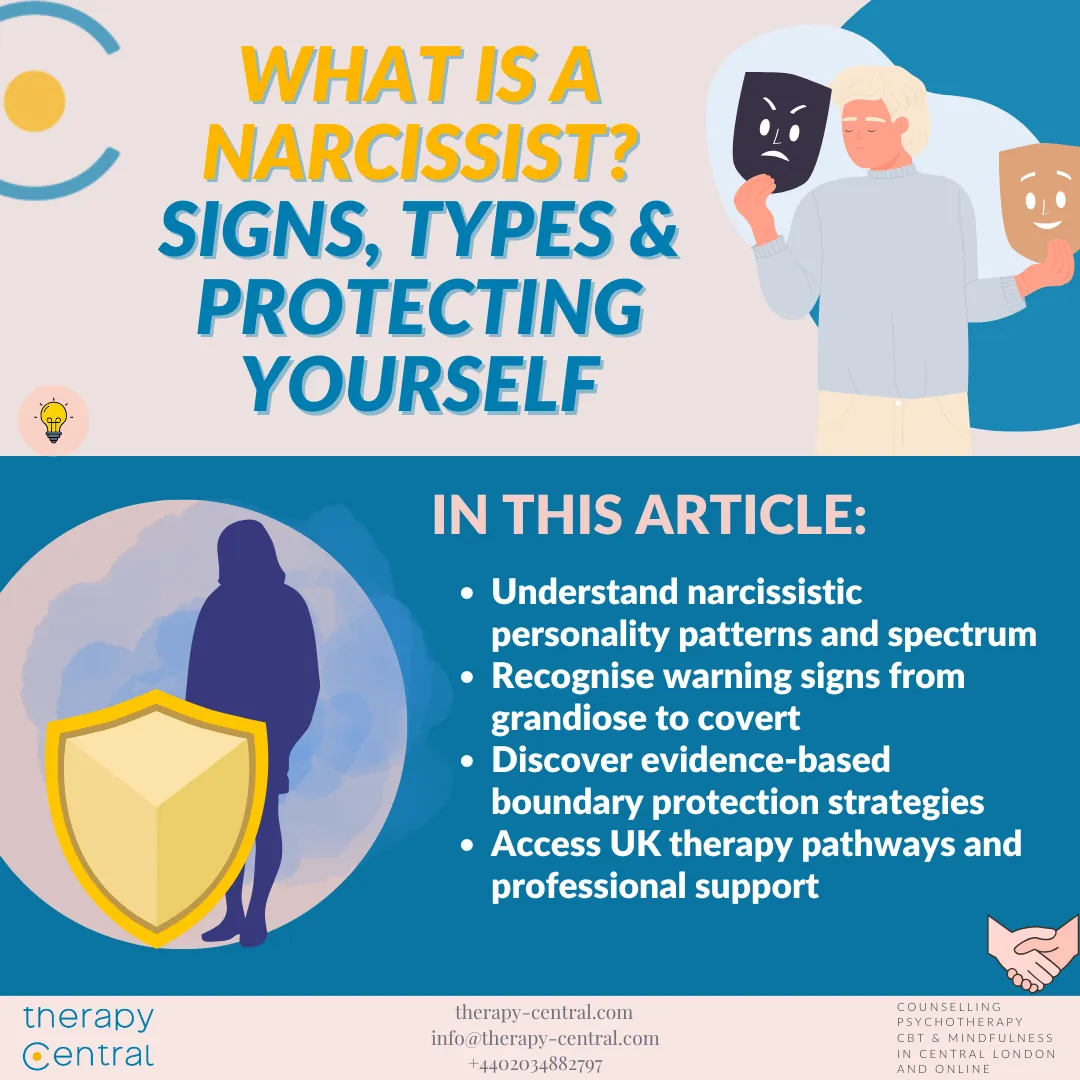
What Is a Narcissist? Understanding Narcissistic Personality
In modern psychology, narcissism describes a pattern of personality traits centred on an excessive focus on oneself, often at others’ expense.
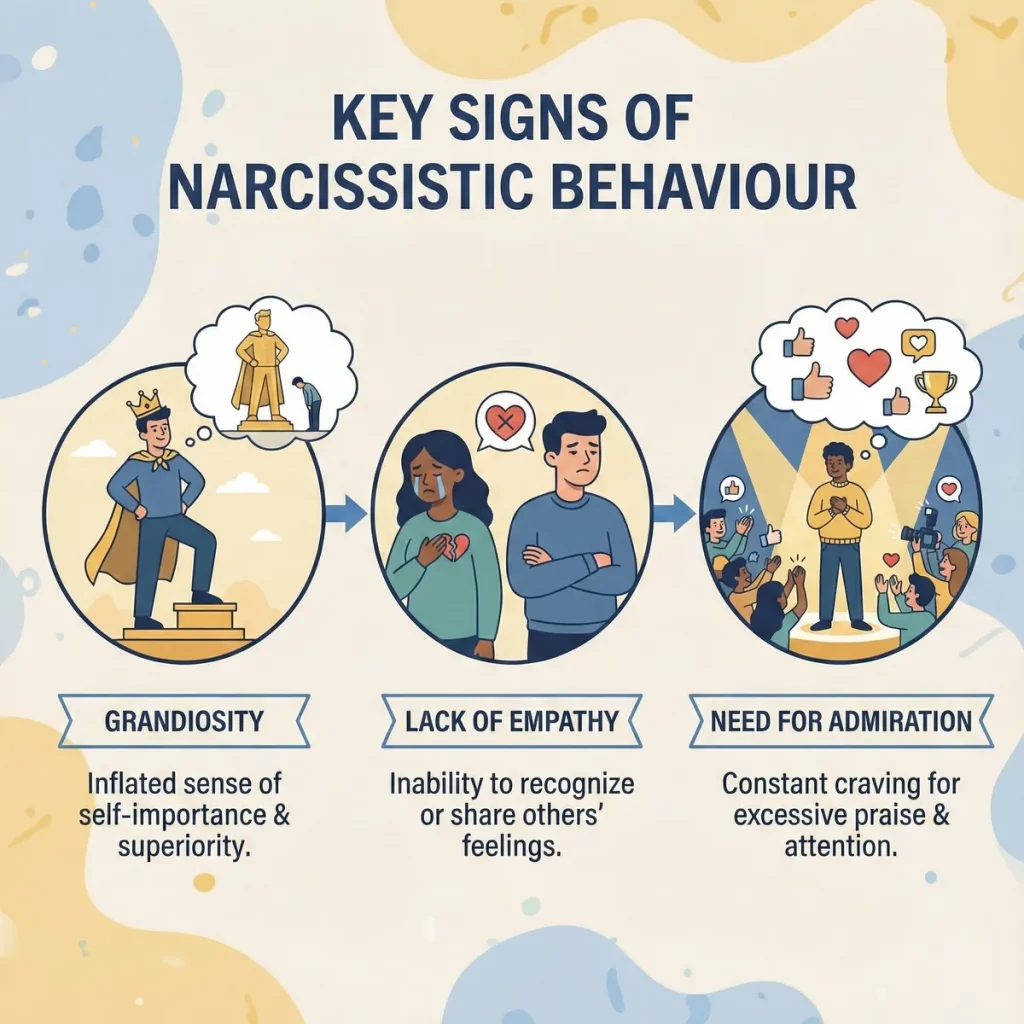
In plain terms, a narcissist is someone with an inflated sense of self-importance, a deep need for excessive attention and admiration, and a lack of empathy for others. This pattern often masks fragile self-esteem vulnerable to criticism.
Narcissistic traits exist on a spectrum – from occasional self-centred behaviour to Narcissistic Personality Disorder (NPD), a clinically diagnosable condition affecting relationships and functioning.
Here’s one thing to keep in mind when considering whether someone may show narcissistic traits. We all have moments of self-focus: prioritising our needs, feeling proud of achievements, wanting recognition. These moments don’t make someone a narcissist. What distinguishes pathological narcissism is the intensity, persistence, and impact of these traits on relationships and day-to-day functioning.
When narcissistic traits become rigid, pervasive, and significantly impair someone’s ability to maintain healthy relationships or function effectively, they may meet criteria for Narcissistic Personality Disorder. However, many people display substantial narcissistic traits without meeting the full diagnostic threshold. Both scenarios can create considerable distress for those around them.
Narcissism vs. Healthy Confidence
You might be wondering: are they just confident, or is this something else? The two can look similar on the surface – until you experience the aftermath. Here’s what separates healthy confidence from narcissism:
| Narcissism | Healthy Confidence |
|---|---|
| Defensive, rage, or dismissiveness when criticised | Considers feedback thoughtfully, adjusts behaviour if valid |
| Superficial or absent empathy for others | Genuine concern, ability to take others’ perspectives |
| Exploitative, conditional respect based on usefulness | Consistent respect, values reciprocity and fairness |
| Fragile self-perception requiring constant validation | Stable internal sense of worth, not dependent on praise |
| Blames others, denies mistakes, avoids accountability | Acknowledges errors, apologises sincerely when appropriate |
| Insatiable need for admiration, central to identity | Appreciates recognition but not dependent on it |
This comparison reveals a fundamental difference: truly confident people possess self-assurance and respect for others. Their confidence doesn’t require diminishing anyone else.
Narcissistic individuals, by contrast, maintain their self-image through a combination of grandiosity and devaluation of others, reflecting underlying insecurity rather than genuine self-esteem.
The Key Signs of Narcissistic Behaviour
Recognising narcissistic patterns early can help you establish protective boundaries before emotional damage accumulates. Each person is unique, but certain behaviours consistently appear across narcissistic presentations.

Grandiosity and Superiority
You finish sharing something important, and within seconds they’ve redirected the conversation to their own achievements. Your chest tightens: have they even heard you? This is grandiosity in action: an inflated sense of their own importance, talents, or achievements that serves as armour against deep-seated feelings of inadequacy.
You might notice them:
- Dominating conversations, steering topics back to themselves
- Name-dropping or inflating their credentials
- Dismissing others’ achievements as insignificant compared to their own
- Expecting preferential treatment in ordinary situations
Profound Lack of Empathy
You’re upset, and they check their phone. You try again, and they sigh, irritated by your need for connection. Perhaps the most damaging characteristic is an inability or unwillingness to recognise or care about others’ feelings and needs.
This doesn’t mean narcissists never perform empathy, but genuine emotional connection remains absent.
In practice, this looks like:
- Showing little concern when you’re upset or struggling
- Changing the subject when you share difficulties
- Dismissing your feelings as “overreacting” or “too sensitive”
- Expressing irritation when your needs conflict with theirs
Insatiable Need for Admiration
You’ve just complimented them, and they’re already fishing for more. Nothing you say is ever quite enough. Narcissistic people require constant validation and praise to maintain their self-image.
This need is never truly satisfied; no amount of admiration fills the internal void. They may fish for compliments, become upset when others receive attention, or create situations that guarantee they’ll be the centre of focus.
Exploitative and Manipulative Behaviour
They’ve borrowed money again, promised to pay back, never did. You help them move house; they ghost you a week later. Because others are primarily viewed as sources of validation or utility, narcissistic individuals often exploit relationships. They may use charm to get what they want, manipulate through guilt or fear, or discard people once they’re no longer useful.
Common manipulation tactics include:
- Gaslighting: Denying your reality, making you question your memory or perception
- Love-bombing: Overwhelming initial affection to create dependency
- Triangulation: Bringing third parties into conflicts to bolster their position
- Guilt-tripping: Making you responsible for their feelings or well-being
Fragile Self-Esteem Behind the Facade
You offered gentle feedback – maybe suggested a different approach – and they exploded. Or went ice-cold for days. Despite outward confidence, narcissistic self-esteem is remarkably brittle. Criticism, perceived slights, or failure can trigger disproportionate rage, sulking, or vindictive behaviour. This fragility explains the defensive, sometimes aggressive reactions to even mild feedback.
Entitlement and Boundary Violations
Narcissistic individuals often believe rules don’t apply to them and their needs automatically take precedence. They may routinely disregard your boundaries, time, or preferences whilst expecting you to accommodate theirs without question.
Types of Narcissism: From Grandiose to Covert
Not all narcissistic presentations look the same. Understanding different subtypes helps you recognise patterns that don’t fit the stereotypical image of the boastful, attention-seeking narcissist.
Overview of Narcissism Subtypes
| Type | Core Traits | Relationship Impact | Example Behaviours |
|---|---|---|---|
| Grandiose | Overt arrogance, dominance, superiority | Dismissive, belittling, controlling | Interrupts constantly, name-drops, exaggerates achievements |
| Covert/Vulnerable | Victim mentality, passive-aggression, hidden entitlement | Guilt-tripping, emotional manipulation, martyrdom | “After all I’ve done for you…”, silent treatment, plays wounded |
| Malignant | Grandiosity plus aggression, paranoia, antisocial traits | Intimidating, vengeful, potentially abusive | Threats, sabotage, derives satisfaction from others’ suffering |
| Communal | False altruism, seeks admiration via “selflessness” | Conditional help, resentment if unacknowledged | Volunteers publicly but criticises recipients privately |
Grandiose Narcissism
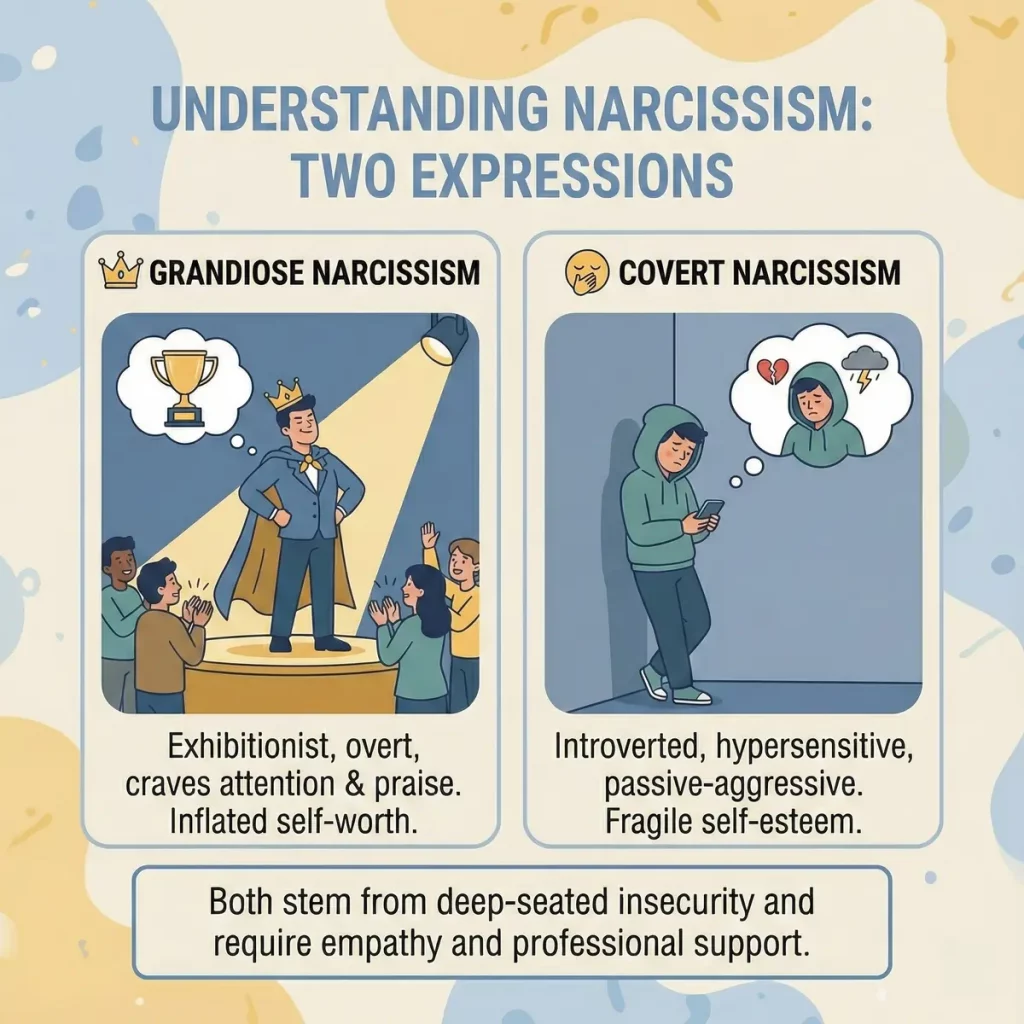
Perhaps you’ve encountered someone who initially seemed magnetic: confident, charismatic, full of bold ideas. They drew you in with apparent self-assurance. Then the pattern revealed itself: they demand centre stage, dismiss others’ contributions, and react with hostility to perceived challenges. This is grandiose narcissism.
These individuals are extroverted, openly boastful, and expect admiration as their due. Relationships with them become exhausting. Behind the bravado lies the same fragile self-worth as other narcissistic types, but it’s masked more effectively.
Covert (Vulnerable) Narcissism
Perhaps you’ve doubted yourself: they seem so vulnerable, so hurt. How could someone this fragile be manipulating you? This is covert narcissism. The confusion you feel? That’s part of the pattern.
These narcissists are harder to spot because they present as shy, anxious, or insecure. Rather than overt grandiosity, they display a sense of being special in their suffering or uniquely misunderstood. They seek validation through sympathy rather than admiration.
You’re not imagining it. In relationships, covert narcissism shows up through:
- Playing the victim to avoid accountability
- Passive-aggressive behaviour when their needs aren’t met
- Resentment towards others’ happiness or success
- Hypersensitivity to perceived slights
- Indirect communication and sulking
Covert narcissists are particularly skilled at guilt-tripping. Phrases like “After everything I’ve done for you” or “I suppose I’m just not good enough” deflect responsibility whilst making you feel obligated. Their vulnerability seems genuine, making it difficult to recognise the underlying entitlement and lack of empathy.
Malignant Narcissism
Malignant narcissism combines grandiose narcissistic traits with antisocial features, aggression, and paranoia. This is the most concerning and potentially dangerous presentation. Malignant narcissists not only lack empathy but may actively enjoy causing harm. They’re vindictive, hold grudges, and can be deliberately cruel.
Warning signs include:
- Threatening behaviour or intimidation
- Pleasure in others’ distress
- Extreme reactions to perceived betrayal
- Paranoid suspicions about others’ motives
- Absence of remorse for harmful actions
If you recognise malignant traits in someone close to you, your safety comes first. You may need to reach out to domestic abuse services or speak with a professional who can help you plan a safe exit strategy.
Communal Narcissism
They seem like the most caring person you know… until you notice the pattern. Helping only when others watch. Volunteering, then complaining bitterly about those they’ve helped. Communal narcissists seek admiration through appearing exceptionally caring, generous, or selfless. They position themselves as the most giving person, the most dedicated volunteer, or the most empathetic listener.
The key difference from genuine altruism is motive and consistency. Communal narcissists help others primarily for recognition and become resentful if their “goodness” isn’t acknowledged. Their generosity is conditional, performative, and often followed by reminders of what they’ve sacrificed.
Somatic and Cerebral Narcissism
These subtypes focus on how a narcissist seeks admiration:
- Somatic narcissists derive their sense of superiority from physical appearance, sexual prowess, or fitness. They may obsess over their looks, become enraged by signs of ageing, or use sexual conquest for validation.
- Cerebral narcissists base their superiority on intellect, knowledge, or achievements. They may belittle others’ intelligence, dominate conversations with displays of knowledge, or dismiss emotional concerns as intellectually beneath them.
Both can overlap with grandiose or covert presentations, adding another layer to how narcissism shows up.
Understanding Narcissistic Personality Disorder (NPD)
Whilst many people exhibit narcissistic traits, Narcissistic Personality Disorder represents a clinical diagnosis with specific criteria. NPD affects an estimated 0.5% to 5% of the general population and falls under the broader category of personality disorders. [1]
DSM-5 Diagnostic Criteria
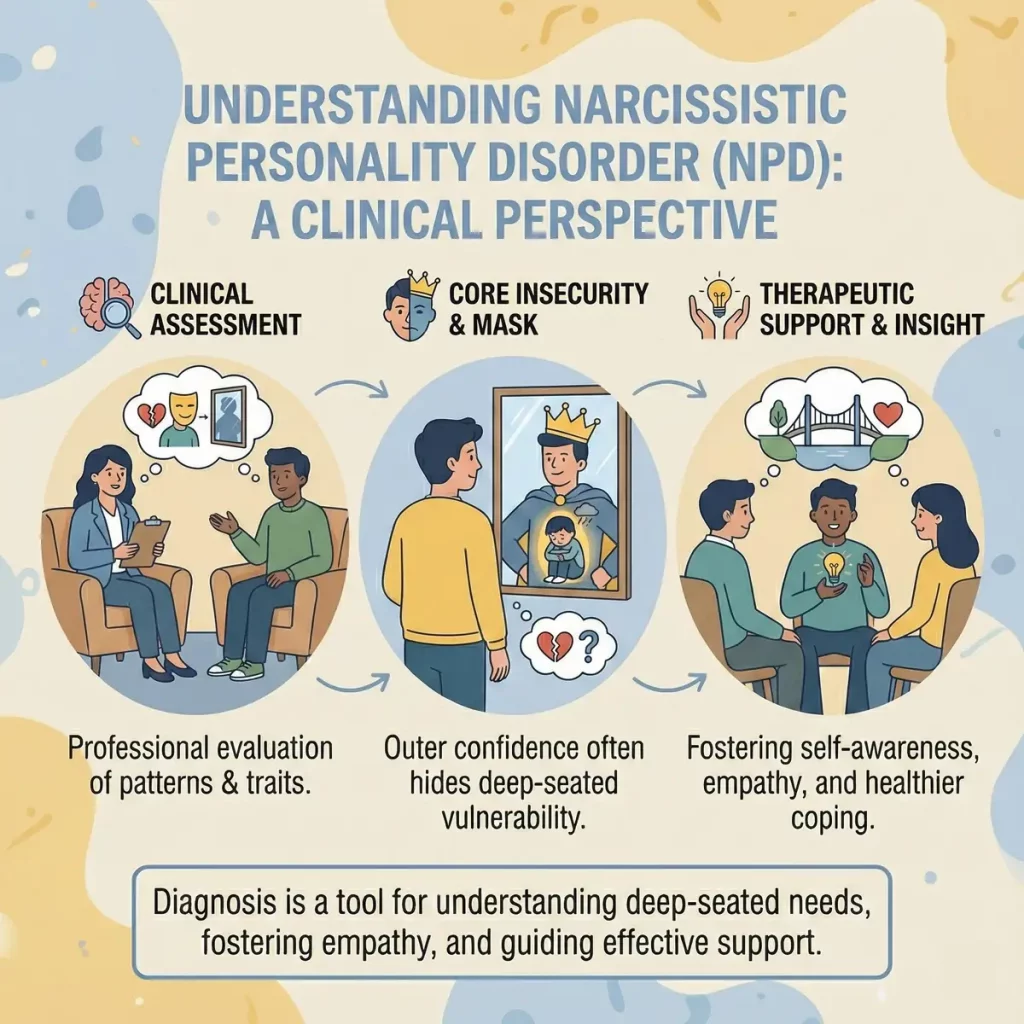
Mental health professionals diagnose NPD based on the Diagnostic and Statistical Manual of Mental Disorders (DSM-5), which requires a pervasive pattern of grandiosity, need for admiration, and lack of empathy, along with at least five of the following [2]:
- Grandiose sense of self-importance
- Preoccupation with fantasies of unlimited success, power, beauty, or ideal love
- Belief they’re special and can only be understood by other special people
- Excessive need for admiration
- Sense of entitlement
- Interpersonally exploitative behaviour
- Lack of empathy
- Envy of others or belief that others envy them
- Arrogant, haughty behaviours or attitudes
These patterns must begin by early adulthood, appear in various contexts, and cause significant distress or functional impairment.
Neurobiological and Developmental Factors
Understanding the roots doesn’t excuse harm, but it does help make sense of why change feels nearly impossible for them. Developmentally, narcissism often stems from:
- Inconsistent parenting: Excessive praise without genuine emotional connection, or conversely, neglect and criticism
- Early trauma: Particularly experiences that threaten a child’s sense of self or safety
- Cultural factors: Environments that overvalue achievement, appearance, or status
- Attachment disruptions: Failure to develop secure early bonds
The patterns are deeply ingrained, often protective mechanisms developed long ago.
Treatment Challenges and Possibilities
NPD is notoriously difficult to treat, primarily because narcissistic individuals rarely recognise their behaviour as problematic. They typically enter therapy only when facing consequences (relationship breakdown, job loss) or experiencing depression or anxiety related to their fragile self-esteem rather than concern about how they treat others.
Therapeutic approaches that show some promise include:
- Schema therapy: Addressing maladaptive patterns developed in childhood
- Transference-focused psychotherapy: Exploring relationship patterns within the therapeutic relationship
- Mentalization-based therapy: Developing capacity to understand one’s own and others’ mental states [3]
However, genuine change requires the narcissist to acknowledge their behaviour patterns, tolerate uncomfortable emotions, and stay in therapy over time. This is extremely hard for someone who protects an inflated self-image, struggles with insight, and finds empathy challenging.
How Narcissism Impacts Relationships and Mental Health
Living with, working alongside, or being raised by a narcissistic person leaves profound psychological scars. The effects extend far beyond occasional arguments or misunderstandings. If you’re experiencing relationship distress related to narcissistic dynamics, professional relationship counselling can provide vital support for processing these experiences and rebuilding trust in yourself.
Emotional and Psychological Toll
Narcissistic relationships create emotional unpredictability, manipulation, and one-sided dynamics. Over time, this creates:
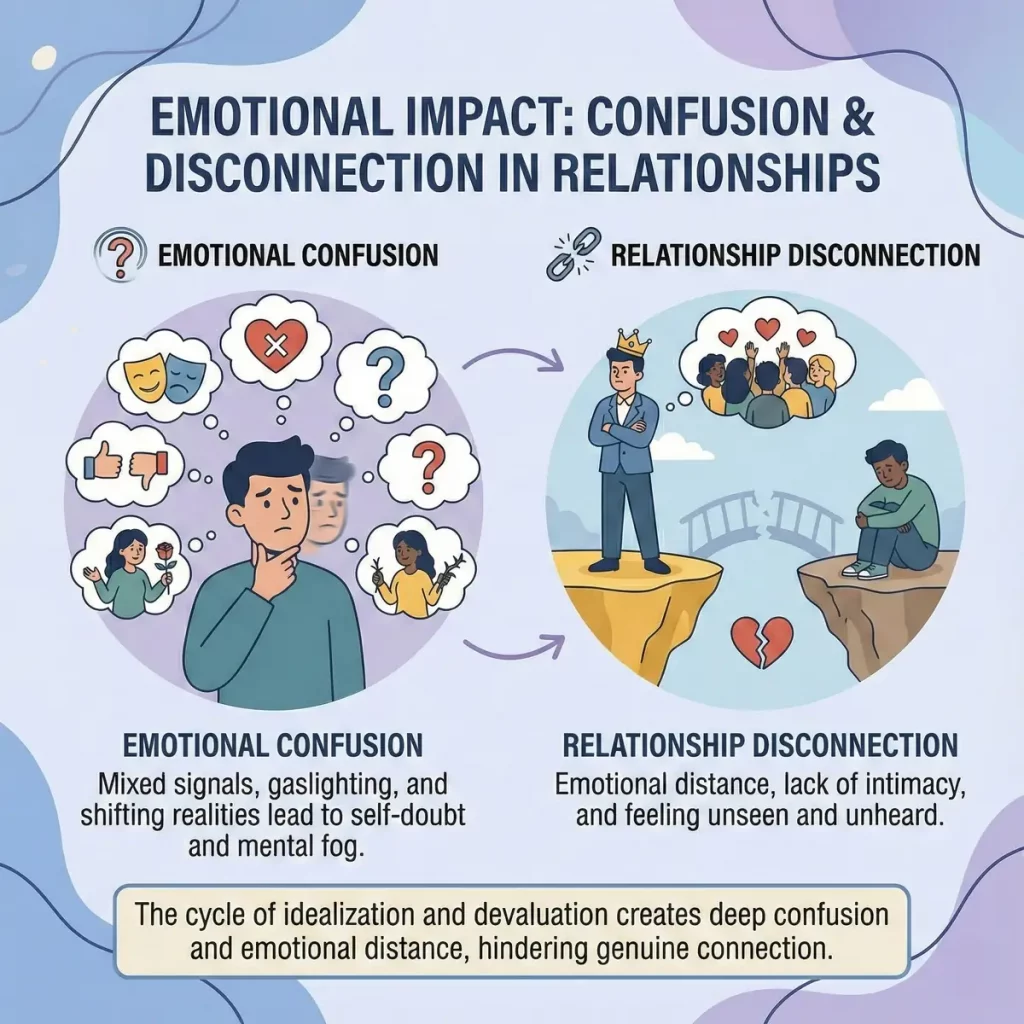
Chronic self-doubt: You replay conversations at 2am, dissecting every word you said. Did you overreact? Were you too sensitive? The ground beneath your sense of reality feels unstable. Constant gaslighting and invalidation make you question your perceptions, memory, and worth.
Anxiety and hypervigilance: Your shoulders are perpetually tense. You monitor their mood before speaking, scanning for signs it’s safe to exist fully in their presence. Walking on eggshells to avoid triggering rage or silent treatment leaves you in a constant state of stress. Your nervous system remains activated, scanning for signs of displeasure.
Depression and isolation: Narcissistic partners often isolate their victims from support networks through jealousy, criticism of friends, or demands for exclusivity. Combined with the erosion of self-worth, this frequently leads to depression.
Post-traumatic symptoms: After prolonged narcissistic abuse, many people develop PTSD-like symptoms including flashbacks, nightmares, emotional numbness, and difficulty trusting others. [4]
The Cycle of Idealisation, Devaluation, and Discard
Narcissistic relationships typically follow a predictable pattern:
Idealisation phase: Initially, the narcissist may seem perfect: attentive, charming, and deeply interested in you. This “love-bombing” creates intense bonding and investment in the relationship.
Devaluation phase: Once they’ve secured your commitment, the narcissist begins criticising, withdrawing affection, comparing you unfavourably to others, or openly disrespecting you. You feel bewildered and hurt by this shift, especially after the earlier idealisation.
Discard phase: When the narcissist finds a new source of validation or becomes bored, they may abruptly end the relationship with shocking coldness. Alternatively, they may keep you in a state of uncertainty, alternating between discard threats and brief returns to idealisation.
This cycle is profoundly destabilising. You may find yourself desperately trying to return to the “good times,” not realising the initial phase was a performance rather than reality.
Impact on Children and Family Dynamics
Growing up with a narcissistic parent creates lasting effects. Children of narcissists often struggle with:
- Difficulty establishing identity separate from parents’ expectations
- Perfectionism or fear of failure
- People-pleasing tendencies and poor boundary skills
- Anxiety, depression, or attachment difficulties in adult relationships
- Tendency to replicate narcissistic dynamics in their own relationships [5]
Recognising these patterns is the first step toward breaking intergenerational cycles through therapy and conscious relationship choices.
Protecting Yourself: Setting Boundaries with Narcissistic People
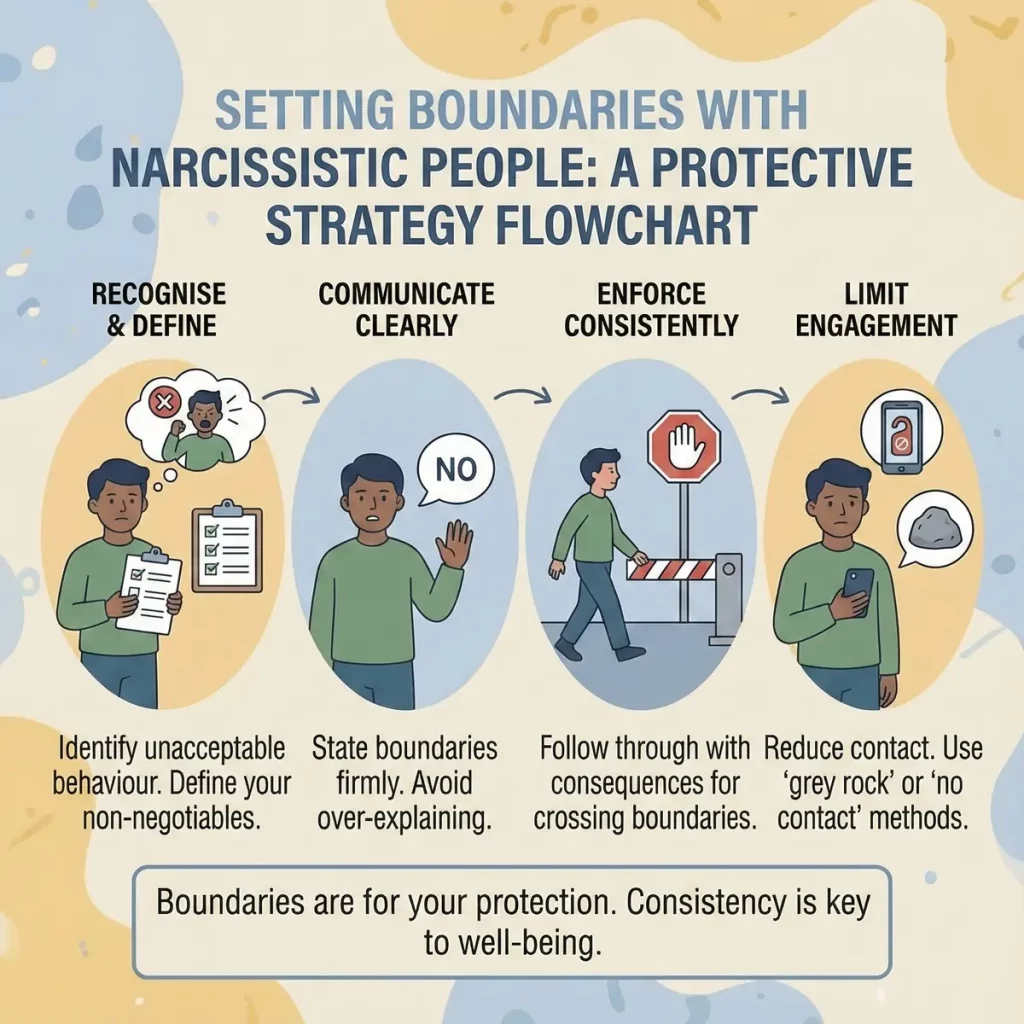
You cannot change a narcissistic person, but you can protect your well-being through strategic boundaries and self-care practices. These approaches prioritise your mental health without requiring confrontation or escalation. Learning to set healthy boundaries matters most when dealing with narcissistic behaviour.
Understanding Your Options
Your approach depends on your relationship type and circumstances:
Low or no contact: If possible (particularly with ex-partners or extended family), minimising interaction protects you from ongoing manipulation. This doesn’t require explanation or permission; you’re entitled to distance yourself. For those considering this step, our article on leaving a narcissist provides practical guidance for planning a safe exit.
Grey rock method: When contact is unavoidable (co-parenting, workplace), becoming as uninteresting as possible reduces the narcissist’s incentive to engage. Respond minimally, share no personal information, and show no emotional reaction to provocations.
Structured contact: Limit interactions to specific contexts (written communication only, presence of witnesses, time-limited meetings) to reduce opportunities for manipulation.
Practical Boundary Strategies
Setting boundaries with someone narcissistic feels impossible, especially when you care about them. This is hard, and you’re not weak for finding it hard. Here’s what helps:
Start by defining your non-negotiables: perhaps being shouted at, having your boundaries repeatedly violated, or being blamed for their emotions. Write these down to clarify your resolve. When it feels safe, communicate your boundary in simple, factual terms: “I won’t continue conversations where I’m being shouted at” or “I need 24 hours’ notice before visits.” Avoid justifying or explaining excessively, which provides ammunition for argument.
Boundaries without enforcement are suggestions. If you’ve stated you’ll end conversations where you’re shouted at, then do so – calmly and without engaging in further debate. Consistency matters more than the specific consequence. Follow through each time, even when it feels uncomfortable.
Particularly if you’re co-parenting or dealing with workplace situations, keep records of concerning behaviours. This serves both as validation for yourself and potential evidence if formal intervention becomes necessary. Document dates, times, specific statements, and your responses.
Managing Your Emotional Responses
Narcissistic individuals are skilled at triggering emotional reactions. Practising emotional regulation helps you maintain control:
- Pause before responding: When you feel provoked, take a breath and buy time (“I’ll think about that and get back to you”)
- Avoid JADE (Justify, Argue, Defend, Explain): Over-explaining invites the narcissist to pick apart your reasoning. Simple, firm statements work better
- Recognise bait for what it is: Insults, provocations, and guilt-trips are designed to elicit reactions. Responding factually or not at all removes their power
- Cultivate emotional detachment: Remind yourself that their behaviour reflects their issues, not your worth
UK Support Pathways
NHS services: Speak with your GP about accessing NHS Talking Therapies (previously IAPT), which offer cognitive behavioural therapy and other evidence-based interventions. For more complex needs, you may be referred to Community Mental Health Teams.
Domestic abuse support: If you’re experiencing abuse from a narcissistic partner, organisations like Refuge (National Domestic Abuse Helpline: 0808 2000 247) and Women’s Aid provide specialist support, safety planning, and refuge services.
Relationship support: Relate offers counselling for individuals and couples navigating relationship difficulties, including sessions focused on recognising unhealthy patterns. For couples dealing with narcissistic dynamics, specialist couples therapy can help both partners understand the impact and explore paths forward.
Crisis support: If you’re in emotional distress, Samaritans (116 123) provide 24/7 confidential support.
Self-Compassion and Recovery
Recovery from narcissistic relationships requires patience with yourself. You may cycle through guilt, anger, grief, and relief – all normal responses to complex loss. Remind yourself:
- You’re not responsible for their behaviour: Their choices reflect their disorder, not your inadequacy
- Healing isn’t linear: You may have setbacks, particularly around anniversary dates or unexpected contact
- Rebuilding trust takes time: Both trusting others and trusting your own judgement will improve gradually
- You deserve better: Healthy relationships are characterised by mutual respect, empathy, and support – qualities absent from narcissistic dynamics
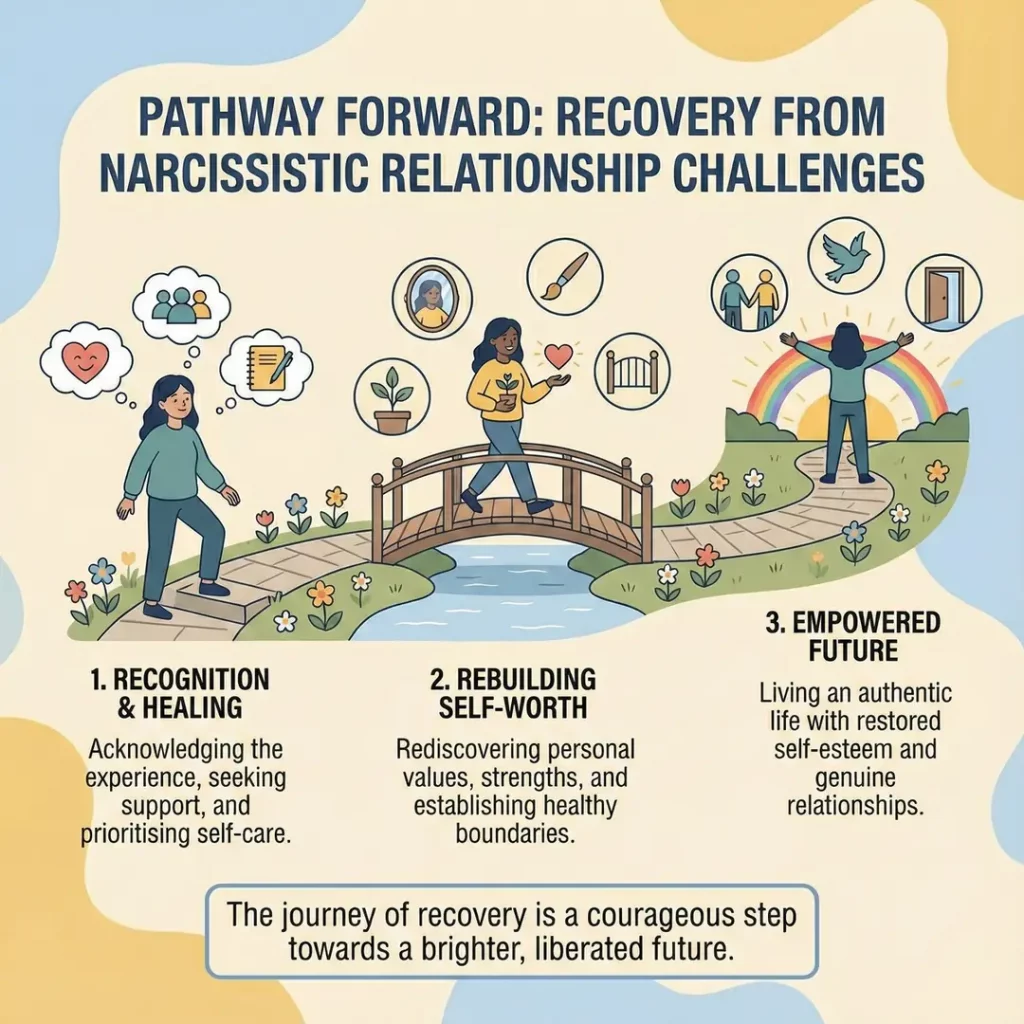
Understanding narcissism empowers you to make informed decisions about your relationships and well-being. Whether you’re navigating a current narcissistic relationship or healing from a past one, you don’t have to face this alone.
When to Seek Professional Support
Setting boundaries with narcissistic individuals is challenging and emotionally draining. Professional support provides validation, strategic guidance, and tools for protecting your mental health.
Consider reaching out if you are:
- questioning your perception of reality
- feeling isolated or unable to confide in others
- experiencing anxiety, depression, or trauma symptoms
- struggling to enforce boundaries consistently
- planning to leave a narcissistic relationship and need safety guidance.
Many people find that having professional support makes a real difference when navigating narcissistic relationships.
Our qualified and experienced therapists and psychologists offer compassionate, evidence-based support to help you process what you’ve experienced, set protective boundaries, and rebuild trust in yourself. Contact us for your free 15-minute consultation, online or in London.
FAQ
Can a narcissist change their behaviour?
Change is rare and requires the narcissist to genuinely recognise the problem and commit to long-term therapy, such as schema therapy or psychodynamic approaches. Most lack the insight or motivation to change, as narcissism inherently involves distorted self-perception and resistance to acknowledging flaws.
How do I know if I'm dealing with a narcissist or just someone confident?
Confidence includes self-assurance *and* respect for others. Narcissism involves entitlement, lack of empathy, exploiting others, and reacting defensively to criticism. Confident people can acknowledge mistakes and value others’ perspectives; narcissists struggle with both, prioritising self-image above genuine connection.
Are all narcissists manipulative?
Most exhibit manipulative behaviours – gaslighting, guilt-tripping, or love-bombing – to maintain control and admiration. However, manipulation may be unconscious, driven by deep insecurity rather than calculated malice. Severity varies: grandiose types may manipulate overtly; covert narcissists often use victimhood or passive-aggression.
What causes someone to become a narcissist?
Narcissism typically develops from a mix of genetic predisposition, childhood experiences (excessive pampering, neglect, or criticism), and environmental factors. Early trauma, inconsistent parenting, or being overvalued without genuine emotional connection can contribute. No single cause applies universally; it’s multifaceted.
Should I confront a narcissist about their behaviour?
Direct confrontation rarely leads to change and often triggers defensiveness, rage, or blame-shifting. If necessary, use calm, factual “I” statements and set clear boundaries rather than labelling them. Prioritise your safety and well-being; consider professional support for navigating these conversations.
How does narcissism differ from NPD?
Narcissism refers to traits like self-centredness or vanity existing on a spectrum; many people display occasional narcissistic behaviours. Narcissistic Personality Disorder (NPD) is a clinical diagnosis requiring persistent, pervasive patterns causing significant relationship or functional impairment, assessed by qualified mental health professionals.