
If you find yourself scanning your partner’s tone, rereading texts, or feeling a sudden drop in your stomach when they take longer to reply, you are not alone. Anxious attachment can make closeness feel uncertain even when love is real. It’s exhausting to want connection so badly and still feel scared of losing it.
It’s like a constant inner negotiation: “Don’t be too much, but don’t lose them.” That can create a lot of shame, even though it is really a nervous system trying to protect you from loss.
In this piece, we go through anxious attachment in relationships in a compassionate way. We will look at how it feels on the inside, why it develops, how it affects relationships, and what healing can look like in everyday life.

What is anxious attachment in relationships?
Anxious attachment in relationships is a pattern where closeness feels uncertain, so a person seeks reassurance, fears abandonment, and becomes hyper‑attuned to signs of disconnection. It often develops from inconsistent caregiving and can improve through awareness, self‑soothing skills, and therapy.
Anxious attachment is one of the insecure attachment styles. 1 It does not mean you are “too much” or incapable of love. It means your nervous system learned that closeness can be unpredictable, so it stays on alert for signs of distance. The result is a powerful pull toward connection mixed with fear of being left. It often develops when caregiving is inconsistent or unpredictable. 2
If you want a broader context, our guide to attachment styles offers the full attachment framework.
Anxious attachment style: how it feels on the inside
Anxious attachment style is often described externally as “needy” or “clingy,” but that language misses the lived experience. Inside, it can feel like:
- a tight chest when someone you love goes quiet
- a constant need to check for cues of safety
- an urge to fix, repair, or apologise quickly
- a belief that love is fragile unless you keep it close.
The inner dialogue can be relentless: “Did I say the wrong thing?” “Are they pulling away?” “What if they leave?” These thoughts are your nervous system trying to protect you from loss.
You might also notice patterns like checking your phone repeatedly, over‑explaining yourself, or replaying conversations to find what went wrong. These are ways of trying to feel safe again when uncertainty feels unbearable.
Many people also notice a reassurance‑relief loop. A quick text reply brings relief, but the fear returns soon after. The system is scanning for certainty, so calm feels temporary until trust becomes more secure.
Clinical note from Dr Raffaello Antonino, Counselling Psychologist & Therapy Central Director
When reassurance feels urgent in anxious attachment, you are not being “too much”, needy, or manipulative. Clinically, it can feel almost like fighting for survival at an emotional level: you are looking for safety, security, and confirmation that the person is still there. What you are struggling with is often self-regulation, not a character flaw. The work is to create a little separation between what you feel like doing and what you do next, because reassurance is not fully in your control. It is difficult for everyone involved, but learning other ways to return to your baseline can gradually teach your nervous system that you can manage without pushing until reassurance arrives.
Anxious preoccupied attachment: key traits
Anxious preoccupied attachment is a subtype of anxious attachment. 3 It is marked by a high need for closeness, strong fear of abandonment, and a tendency to focus on the relationship above other needs.
People with anxious preoccupied attachment often:
- prioritise their partner’s needs over their own
- feel insecure without frequent contact or reassurance
- become hyper‑vigilant to changes in mood or tone
- struggle to feel secure even in a loving relationship.
This can look like over‑functioning in the relationship – doing more to keep closeness, while silently fearing you are “too much.” The result can be exhaustion, resentment, or losing touch with your own needs.
Anxious‑preoccupied patterns can also include protest behaviours, such as withdrawing to test a partner, repeatedly asking for proof of love, or becoming overly accommodating to avoid conflict. These are attempts to keep closeness, even if they backfire.
Over time, the person may start to feel defined by the relationship, losing touch with their own routines and identity. That can create even more anxiety, because the relationship begins to feel like the only source of safety.
Signs of anxious attachment in relationships
Signs of anxious attachment in relationships can show up in thoughts, emotions, and behaviours. Common signs include:
- frequent reassurance seeking (“Are we okay?”)
- overthinking or replaying conversations
- fear of abandonment or being replaced
- intense sensitivity to a partner’s mood
- protest behaviours (calling repeatedly, threats to leave, pulling away to test)
- feeling unsettled unless there is constant closeness.
Signs of anxious attachment
You might notice yourself checking messages repeatedly or feeling panicky when plans change. Even small shifts – a delayed reply, a shorter message – can feel like a warning sign.
Anxious attachment symptoms
Symptoms often include racing thoughts, physical tension, and a strong need to regain connection quickly. These symptoms can look like anxiety, but they are specifically triggered by relationship uncertainty.
For example, imagine your partner says they need an evening alone. Your mind races, your chest tightens, and you send multiple texts to “fix it.” That is not weakness – it is your attachment system sounding the alarm.
Anxious attachment symptoms often show up in the body first: tension, nausea, a racing heart, or an urgent need to act. Recognising these signals early helps you interrupt the cycle before it escalates.
You might also notice behaviours like checking social media, asking friends to interpret a text, or over‑analysing every pause in conversation. These are attempts to regain certainty, not signs that you are failing.
One early distinction helps: anxious attachment is relationship-specific, while an anxiety disorder tends to affect several areas of life. They can overlap, and we return to this below, but the examples here focus on attachment alarms around closeness, distance, and reassurance.
If the feeling is more about general relationship insecurity, confidence, or jealousy than this attachment alarm, our guide to feeling less insecure in a relationship may be a better next read.
To clarify the difference, here is a quick comparison of anxious versus secure attachment patterns:
| Pattern | Internal cues | Typical response | Relationship impact |
|---|---|---|---|
| Anxious attachment | Fear, urgency, hyper‑vigilance | Seek reassurance, monitor cues | Push‑pull dynamics, tension |
| Secure attachment | Calm, grounded, flexible | Communicate needs calmly | Stability, trust, repair |
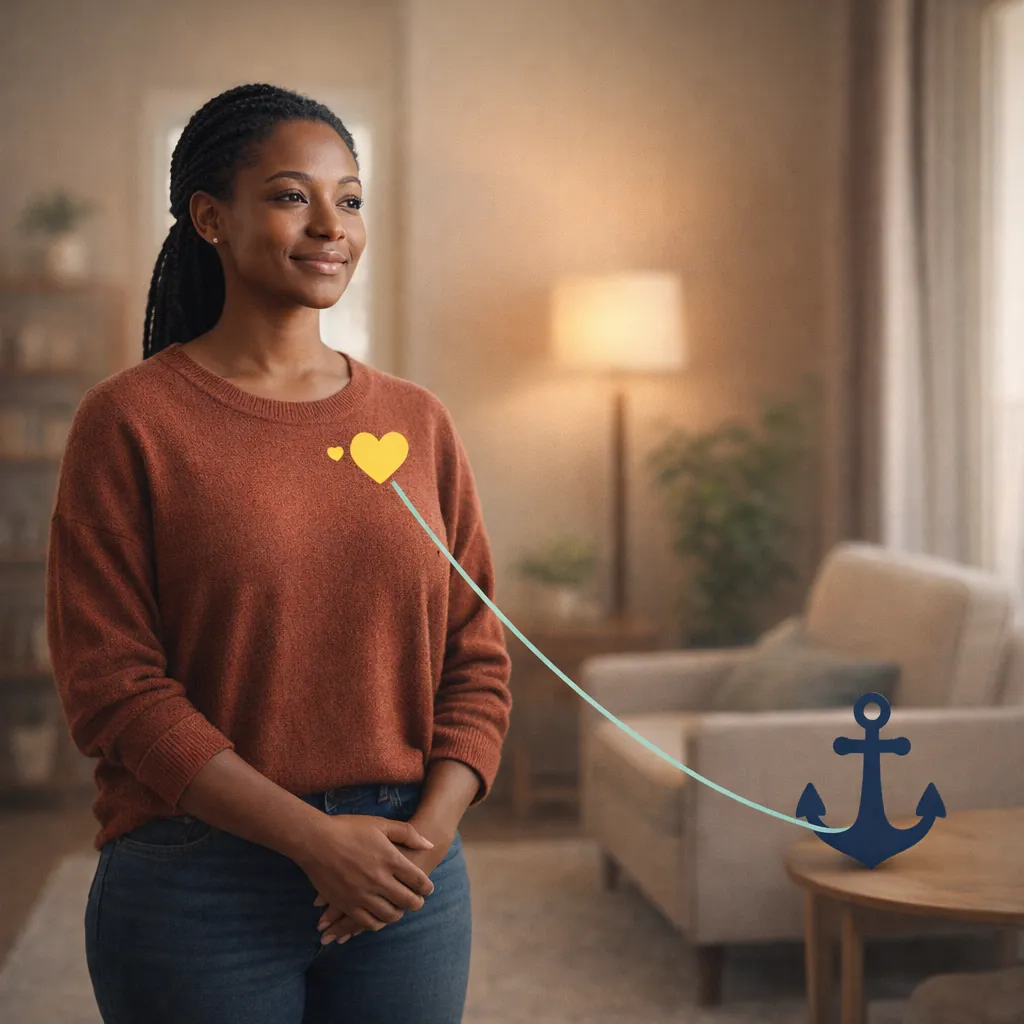
Anxious responses are not “wrong.” They are signals that safety is needed.
Why anxious attachment develops
Anxious attachment often develops in childhood environments where care was inconsistent – sometimes warm, sometimes distant, sometimes unpredictable. The child learns that closeness is possible but not reliable, so they become extra alert to cues that a caregiver is pulling away.
This pattern can also develop after later experiences such as betrayal, abandonment, or emotionally unpredictable relationships. The nervous system learns to stay on high alert so that it can protect against loss.
Even loving caregivers can create anxious patterns if connection is inconsistent. A child learns that closeness is possible but unpredictable, so they amplify bids for attention to keep connection near. That strategy can follow into adult relationships.
Over time, the attachment system becomes highly sensitive. It scans for signs of disconnection and seeks reassurance as a way to regulate fear. That is why anxious attachment can feel intense even when you are in a loving relationship.
This sensitivity can also create an inner‑child response: a feeling that you have to earn closeness or prove you are lovable. When that belief is active, even minor distance can feel like danger. Healing often involves building a steadier internal message: you are worthy of care, even when someone is busy or overwhelmed.
Anxious attachment vs anxiety disorder: what’s the difference?
Anxious attachment is a relationship pattern. Anxiety disorder is a clinical condition that can affect many areas of life. 4 The two can overlap, but they are not the same.
With anxious attachment, anxiety is often triggered by closeness and perceived distance. With anxiety disorder, worry may be more general or persistent across different contexts. Someone can experience both, but it helps to name them separately so the support is targeted.
For example, someone with anxious attachment may feel calm in most areas of life but panic when a partner goes quiet. Someone with anxiety disorder may feel persistent worry across work, health, and relationships. Knowing the difference helps you choose the right tools. Attachment insecurity is also linked with poorer mental health outcomes. 5
In practice, this means attachment work often focuses on relationships and connection, while anxiety‑disorder treatment may focus more broadly on worry patterns, avoidance, and physiological regulation. Many people benefit from a blend when both are present.
If you are unsure, a therapist can help you understand whether your anxiety is primarily attachment‑based, generalised, or a mix of both. 9 Support can be online or in person depending on local availability. 10
How anxious attachment affects relationships
Anxious attachment can create a push‑pull dynamic. One partner seeks closeness and reassurance; the other may feel overwhelmed and pull away. This can intensify the anxious partner’s fear, which then leads to more seeking or protest behaviour.
The cycle often looks like this:
- Anxious partner senses distance
- Reassurance seeking increases
- Partner feels pressured and withdraws
- Anxiety spikes, leading to more pursuit.
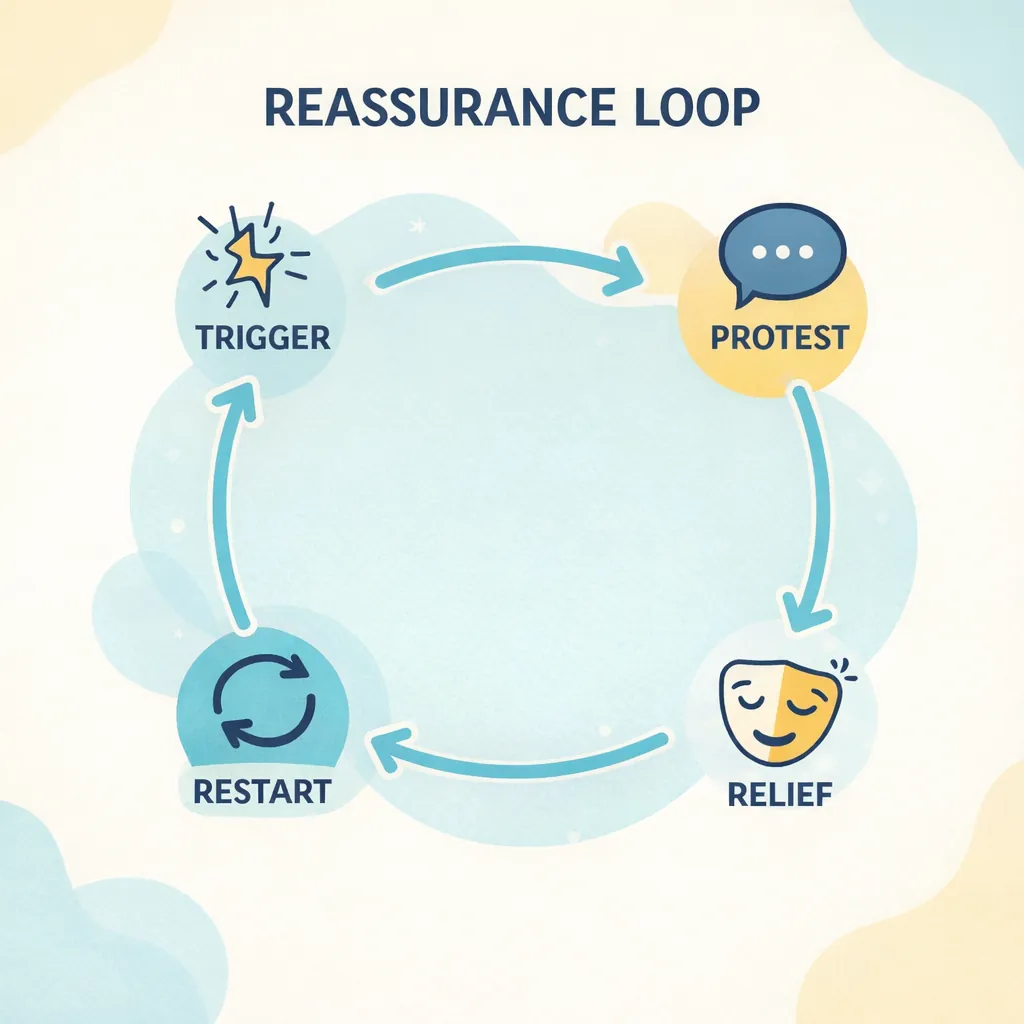
Over time, this pattern can erode trust and create resentment on both sides. 6 The anxious partner feels abandoned; the other partner feels controlled or unable to breathe.
In anxious‑avoidant pairings, the cycle can become self‑reinforcing: the more the anxious partner pursues, the more the avoidant partner withdraws, which then heightens the anxious partner’s fear. Both people can end up feeling misunderstood and unsafe.
Many people with anxious attachment also find themselves drawn to avoidant partners because the chemistry feels intense – but the dynamic can be unstable. Understanding this pattern is the first step toward changing it.
Sometimes anxious attachment can lead to self‑sabotage: cancelling plans to test loyalty, provoking an argument to get reassurance, or withdrawing to see if they will chase. These behaviours make sense in fear, but they often create the very distance you are trying to avoid.
Clinical note from Dr Raffaello Antonino
I would want to be compassionate here, but also honest. Anxious attachment is not your fault, and it does not mean you are “too much”. At the same time, when the need for reassurance becomes very urgent, it can become difficult for the other person too. The more the cycle repeats, the more both partners can feel trapped inside it. This is why the work is not about blaming yourself, but about learning how to recognise the alarm, slow the reaction down, and build other ways to feel safe.
Without awareness, the anxious partner can start to self‑abandon: cancelling plans, over‑apologising, or staying quiet to avoid conflict. That short‑term relief often creates long‑term resentment. Naming the pattern helps both people choose different responses.
If you want structured support for these cycles, relationship counselling can help you understand the pattern and, where relevant, support safer conversations with your partner.
Healing anxious attachment: therapy approaches
Healing anxious attachment is possible. It involves learning how to self‑soothe, build internal security, and communicate needs without panic.
Therapy approaches that often help include:
- Attachment‑focused therapy to build a secure base and reshape relational expectations.
- EMDR for attachment trauma and early painful memories. 8
- CBT to challenge catastrophic thoughts (“They’re leaving”) and build realistic narratives. 7
- ACT or values‑based work to align actions with your deeper values rather than fear.
- Compassion‑focused therapy to soften self‑criticism and build internal safety.
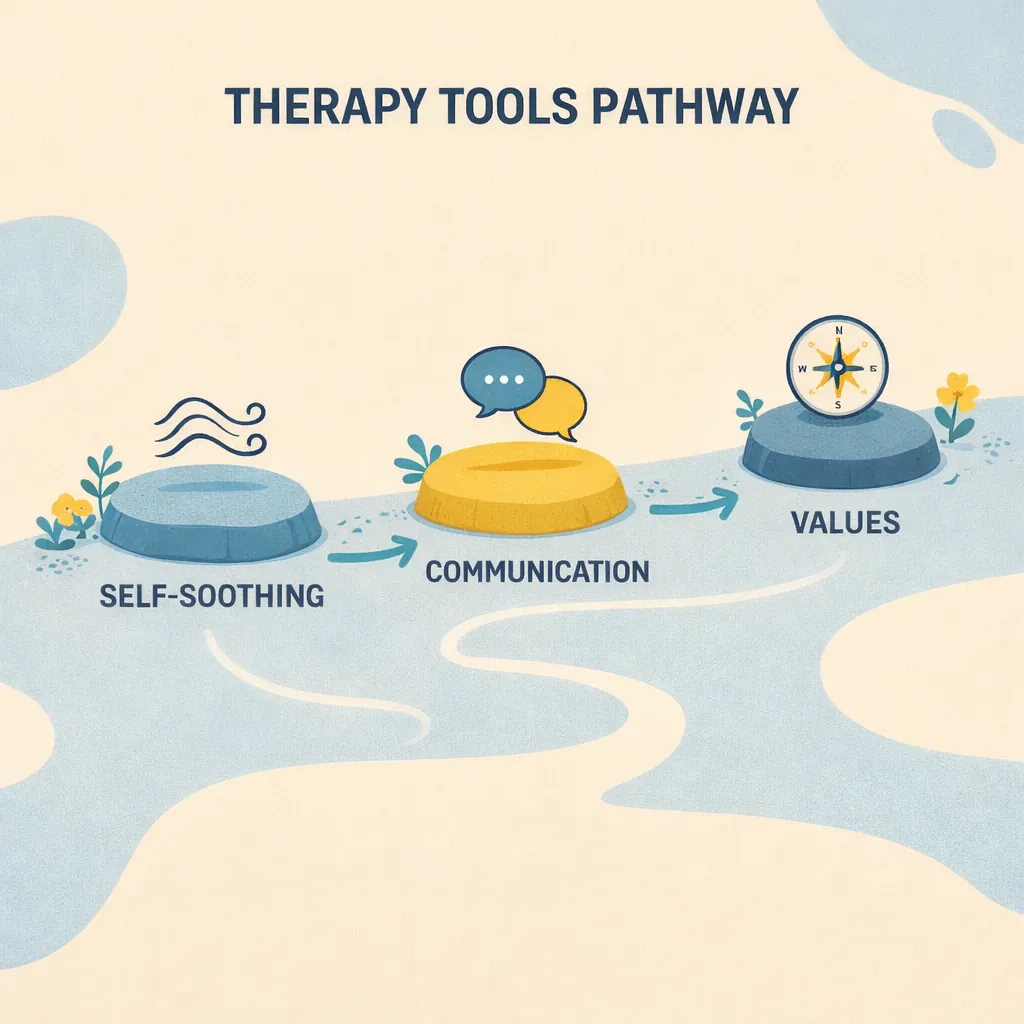
In practice, therapy often starts with stabilising the nervous system: grounding, noticing triggers, and building tolerance for uncertainty. Later stages focus on relational repair, clearer communication, and creating safer patterns in real relationships.
A good therapist also helps you build an internal secure base – a sense that you can steady yourself even when connection feels shaky. This can involve practising self‑soothing, strengthening self‑worth, and learning to ask for reassurance in healthier ways.
If attachment trauma is present, EMDR or other trauma‑informed approaches can reduce the intensity of abandonment triggers. Over time, this makes it easier to pause, breathe, and choose a response rather than reacting from fear.
Healing also involves rebuilding trust in yourself – learning that you can soothe your own nervous system and ask for closeness without chasing. That shift turns reassurance into a choice rather than a survival strategy.
If anxiety feels overwhelming, anxiety therapy can help you build regulation skills alongside attachment work.
Attachment‑focused therapy can be especially useful if early relational wounds are active in the present.
Practical exercises to heal anxious attachment
Practical exercises help turn insight into daily change. Think of these as small experiments rather than rules to follow perfectly.
Pacing matters. If a step feels too big, scale it down. The goal is to stay within your window of tolerance so your nervous system can learn safety, not panic.
- Name the trigger: “I felt the panic when they didn’t reply.” Naming reduces intensity.
- Ground your body: Use slow breathing, cold water, or a 5‑4‑3‑2‑1 grounding scan before reacting.
- Delay reassurance‑seeking: Wait 10-15 minutes before texting for reassurance. Notice what changes in your body.
- Use values‑based communication: Ask, “How do I want to show up as a partner?” and respond from that place.
- Track evidence: Write down moments of reliability to balance the fear‑based story.
- Build self‑worth rituals: Choose small daily acts that remind you you’re safe and valuable outside the relationship.
- Practise clear requests: Use one direct sentence (“Could we have a check‑in tonight?”) rather than multiple hints.
- Repair quickly: If you protest or overreact, return to a calm repair as soon as you can.
- Self‑reassurance practice: Place a hand on your chest and speak to yourself the way you would to a friend: “I’m okay. I can handle this.”
- Connection‑repair script: Practise one sentence you can use after a conflict, such as “I care about us, and I want to reset.”
Consistency matters more than perfection. Small steps done daily will change your nervous system over time.
Here is a simple “trigger‑to‑repair” table:
| Trigger | Anxious response | Repair alternative |
|---|---|---|
| Slow reply | Panic, multiple texts | Self‑soothe, send one clear message |
| Cancelled plan | Fear of rejection | Name feelings, ask for a new plan |
| Less affection | Over‑analysing | Request connection calmly, not urgently |
Small, consistent steps are more powerful than big overhauls. Healing is gradual, and that is normal.

Supporting a partner with anxious attachment
If your partner has anxious attachment, your steadiness can be deeply reassuring – but it is not your job to fix them.
Helpful approaches include:
- Keep communication clear and consistent
- Follow through on plans when possible
- Offer reassurance without dismissing their feelings
- Encourage them to build self‑soothing skills too
- Avoid using silence as punishment.
A simple script could sound like: “I care about you. I’m not going anywhere. I also need a little space to reset, and I’ll check in tonight.” This supports connection without feeding panic.
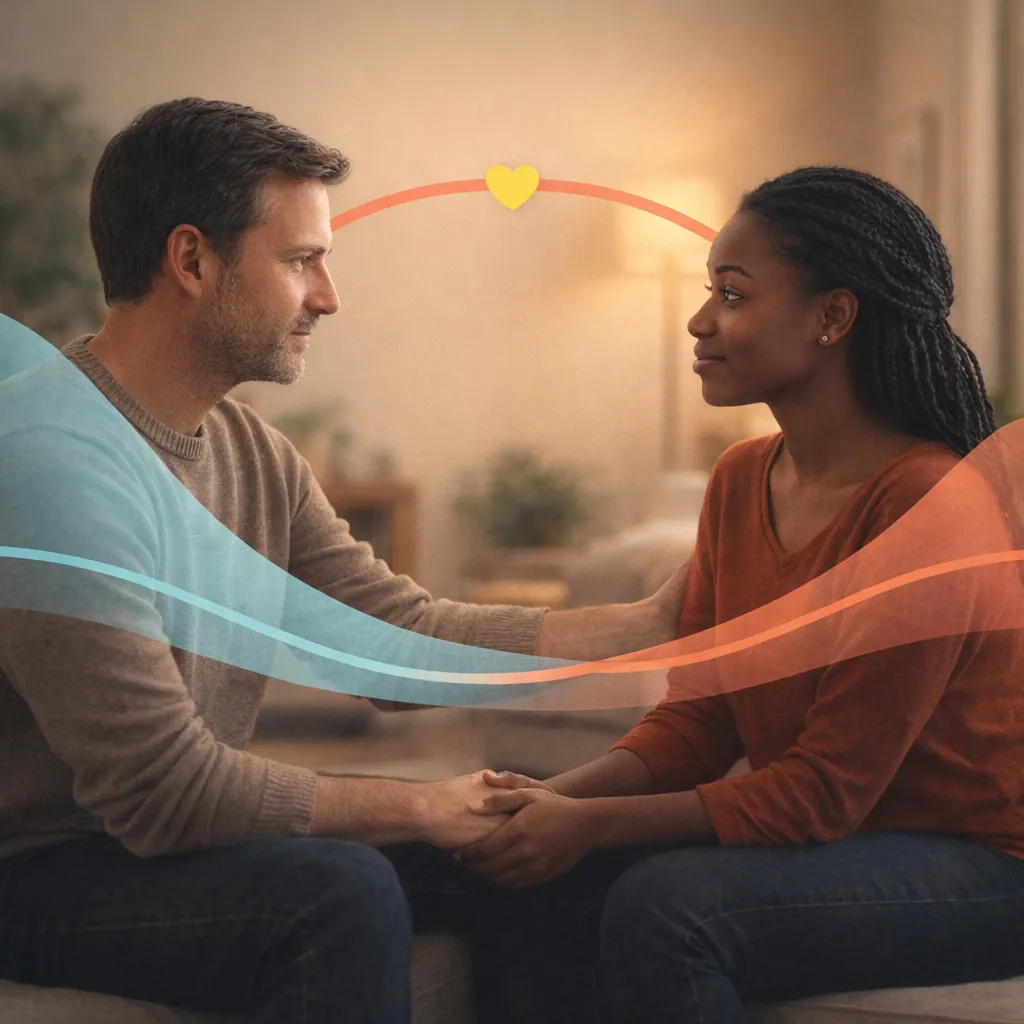
If you start feeling overwhelmed, it is okay to set firmer boundaries or seek joint therapy. Supporting someone with anxious attachment does not mean abandoning your own needs.
Reassurance can be helpful. It works best when it is consistent and paired with encouragement to build self‑soothing skills. The goal is to support closeness without making one partner responsible for regulating all the anxiety.
If you are the partner, it can help to say what you can offer and what you cannot. For example, “I can check in after work, but I can’t text all day.” Clear limits can actually feel safer because they reduce uncertainty.
When to seek professional help
If anxious attachment is causing significant distress, frequent conflict, or impacting your sense of self‑worth, professional support can help. Therapy can offer a safe place to explore patterns, build internal security, and practise new ways of relating.
If you feel stuck or overwhelmed, it is okay to ask for help. Many people move toward earned security with consistent support.
Professional help is especially useful if anxiety is disrupting work, sleep, or self‑esteem, or if you notice repeated patterns of chasing and panic across relationships.
If you would like to explore this with help, our qualified and experienced therapists and psychologists can support you.
If you would like support, book a free 15-minute consultation.
FAQ
What are the signs of anxious attachment?
Common signs include frequent reassurance seeking, fear of abandonment, overthinking messages, and intense sensitivity to a partner’s mood or distance.
How do you heal anxious attachment?
Healing involves awareness, self‑soothing skills, healthier communication, and often therapy to build a secure base and reduce fear‑driven reactions.
What causes anxious attachment?
It often develops from inconsistent caregiving, emotional unpredictability, or early experiences where closeness felt uncertain or unsafe.
Is anxious attachment the same as anxiety disorder?
No. Anxious attachment is a relationship pattern, while anxiety disorder is a clinical condition. They can overlap but are not the same.
Can anxious attachment ruin relationships?
It can create tension and push‑pull dynamics, but with awareness and support many couples build safer closeness and stronger trust.
What is anxious preoccupied attachment?
It is a subtype of anxious attachment marked by strong fear of abandonment, high need for reassurance, and difficulty feeling secure in relationships.