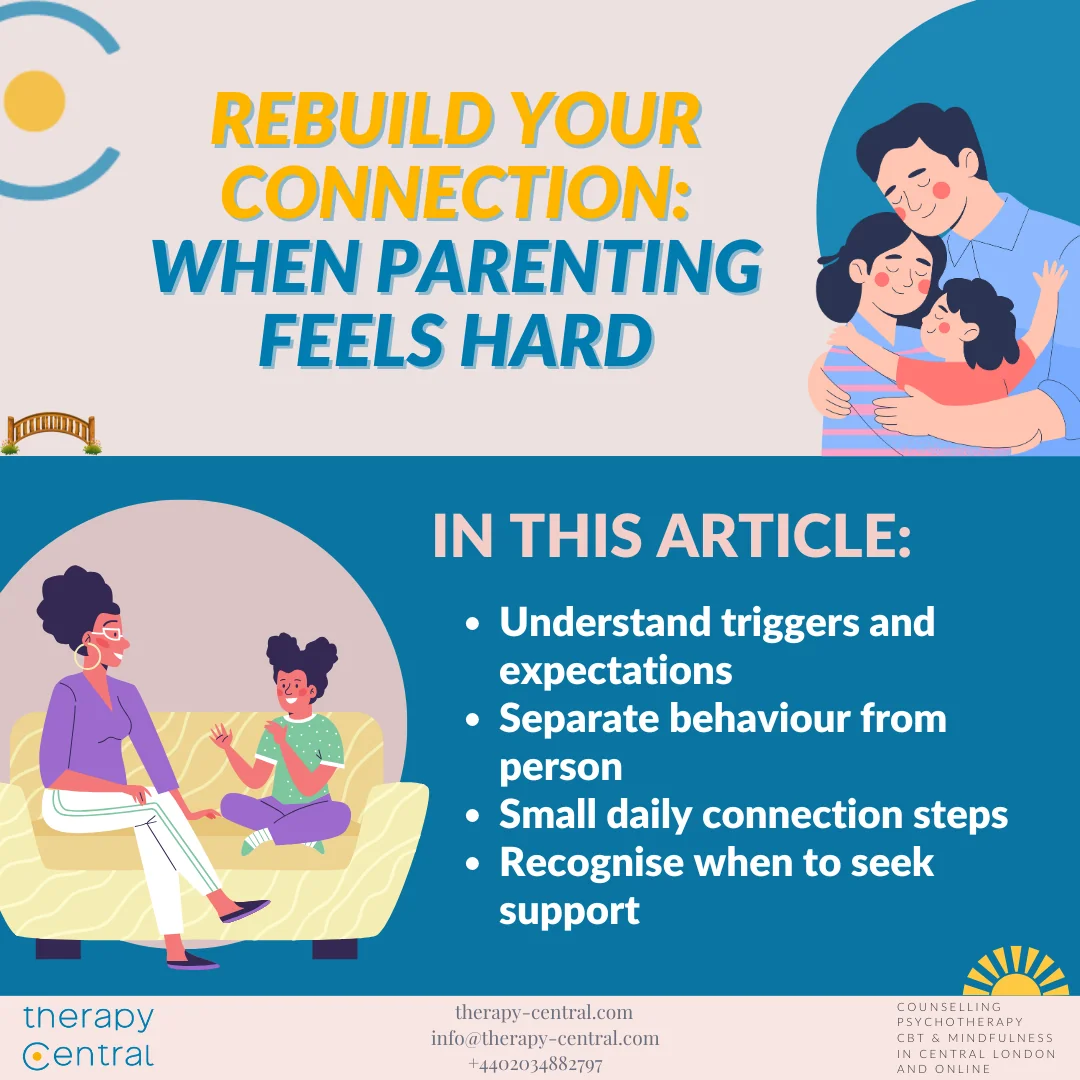

That knot in your stomach when you think about spending the weekend with your child. The relief you feel when they’re finally asleep. The guilt that follows these feelings. You love your child deeply, yet there are moments where you genuinely don’t like them-and that realisation terrifies you.
When we feel disconnected from our child, what to do if you dislike your child becomes an urgent question. This guide explores why these feelings happen and offers evidence-based strategies to rebuild your connection.
Is It Normal to Feel Like You Don’t Like Your Child?
It’s completely normal for parents to occasionally feel disconnected or frustrated with their child. These feelings don’t make you a bad parent – they signal that you may need support in understanding your child’s behaviour and managing your own emotional responses.

This doesn’t mean you love your child any less. Parental love and parental like operate on different emotional systems. You can deeply love someone while struggling to enjoy their company during difficult periods.
What makes these feelings particularly challenging is our cultural expectation that parents should feel unending delight in their children. This unrealistic standard creates shame around perfectly normal emotional responses.
Understanding Why You Feel This Way

Behaviour vs. Person: A Crucial Distinction
The most important concept to grasp involves distinguishing between disliking your child’s behaviour and disliking them as a person. Often, what we interpret as disliking our child actually reflects exhaustion from managing challenging behaviours.
Signs you’re struggling with behaviour rather than your child:
- You feel frustrated during tantrums but warm during calm moments.
- Specific actions (defiance, aggression, whining) trigger your negative feelings.
- You can list things you appreciate about your child’s personality.
- The feelings intensify during stressful periods.
Common Triggers for Parental Disconnection
Understanding what triggers these feelings helps you address the root causes.
Temperament mismatches occur when your natural personality clashes with your child’s. Perhaps you’re highly organised whilst your child thrives in chaos, or you’re introverted but your child demands constant social interaction.
Unmet expectations create disappointment. Maybe you envisioned a quiet, studious child but have an energetic athlete, or you expected easy bedtimes but face nightly battles.
Your own childhood experiences influence your reactions. If you were raised to be seen and not heard, a naturally expressive child might trigger unexpected irritation.
Life stress makes everyone less patient. When you’re managing work pressure, relationship difficulties, or financial strain, your tolerance for normal child behaviour decreases significantly.
Recognising the Difference Between Behaviour and Person
Learning to separate your child from their actions becomes fundamental to rebuilding connection. This psychological skill, called cognitive flexibility, helps you respond to situations rather than react emotionally.
Reframing Your Internal Dialogue
Instead of thinking “My child is so difficult,” try “My child struggles to manage their emotions right now.” This subtle shift moves you from adversarial thinking to problem-solving mode.
- “They’re being annoying” → “They’re seeking connection in an unhelpful way.”
- “They never listen” → “They’re struggling to understand what I need.”
- “They’re so selfish” → “They’re developmentally focused on their own needs.”
- “They’re deliberately defiant” → “They’re testing boundaries to feel secure.”
Understanding Developmental Stages
According to longitudinal studies published in Nature Neuroscience, the prefrontal cortex – responsible for planning, decision-making and impulse control – undergoes significant structural changes throughout adolescence and into the mid-twenties [2]. What appears as deliberate defiance often reflects normal developmental limitations.

Ages 5-8: Developing independence whilst needing security
Ages 9-12: Increased peer influence and identity formation
Ages 13-18: Brain reorganisation affecting decision-making and emotional control
When you understand that your 4-year-old literally cannot calm down from a meltdown without help, or that your teenager’s risky choices reflect brain development rather than rejection of your values, compassion becomes easier.
Practical Strategies to Rebuild Connection
Research published in the Journal of Family Violence shows that parenting styles significantly impact adolescent outcomes, with consistent parenting approaches being particularly protective during challenging developmental periods [3].
Start Small: The 5-Minute Connection Rule
Rather than attempting dramatic relationship overhauls, begin with five minutes of positive interaction daily. This might involve reading together without discussing behaviour, playing a simple game they enjoy, taking a brief walk whilst chatting about their interests, or sharing a snack whilst listening to their stories.
Consistency trumps intensity. Five minutes daily builds more connection than sporadic hour-long activities.
Focus on Their Strengths
When feeling disconnected, we often fixate on everything our child does wrong. Deliberately noticing their positive qualities rewires your brain towards appreciation.
Keep a daily list of things you genuinely appreciate about your child: their sense of humour during family dinner, how they helped their sibling with homework, their creativity in building elaborate pillow forts, or their persistence in learning to ride a bike.
Practice Emotional Regulation Together
Children learn emotional management by watching us. When you model healthy responses to frustration, you teach invaluable life skills whilst strengthening your relationship.

- Stop what you’re doing
- Take three deep breaths
- Observe your feelings without judgement
- Proceed with intention rather than reaction
Making this a family practice removes shame and creates shared language for managing difficult emotions.
Age-Appropriate Connection Strategies
Different developmental stages require different approaches to rebuilding connection. Understanding these age-specific needs helps you choose the most effective strategies for your particular situation and your child’s current developmental phase.
| Age Group | Connection Strategies | Common Challenges |
|---|---|---|
| Toddlers (2-4) | Physical play, simple routines, lots of comfort | Tantrums, defiance, emotional volatility |
| School Age (5-8) | Shared activities, bedtime stories, family games | Testing boundaries, peer conflicts, academic pressure |
| Pre-teens (9-12) | Interest-based conversations, collaborative projects | Increased independence, friendship drama, body changes |
| Teenagers (13-18) | Respectful discussions, shared media, parallel activities | Identity formation, risk-taking, emotional intensity |
These strategies work because they meet children where they are developmentally rather than where you wish they were. Understanding that your teenager’s eye-rolling isn’t personal rejection but normal individuation helps you respond with patience rather than hurt feelings. The key lies in adapting your approach to match their developmental capabilities while maintaining consistent love and boundaries.
Managing Your Own Emotional Wellbeing
Addressing Parental Guilt
Feeling like a bad mum or experiencing guilt about your emotions happens to most parents. Self-compassion research shows that treating yourself harshly can affect your emotional capacity for supporting others [4].
Practice speaking to yourself as you would a dear friend. You wouldn’t tell a struggling friend they’re terrible parents – extend the same kindness to yourself.
Building Your Support Network
Parenting struggles feel less isolating when you connect with others facing similar challenges. Connection with other parents provides perspective and reduces the shame that intensifies difficult feelings.
Consider parent support groups in your local area, online communities for parents facing similar challenges, regular conversations with trusted friends about parenting realities, or professional support from family therapists or parenting coaches.
Taking Care of Your Basic Needs
When you’re sleep-deprived, hungry, or overwhelmed, everything feels harder. Your emotional regulation depends on meeting your basic needs. Prioritise sleep, even if it means lowering other standards temporarily. Eat regular, nourishing meals rather than surviving on coffee and guilt. Take brief breaks when possible, even if it’s just five minutes alone in your car. Move your body in whatever way feels manageable.
When to Seek Professional Support
Sometimes, rebuilding connection requires professional help. Consider therapy when negative feelings persist despite trying connection strategies, you feel consistently angry or resentful towards your child, your relationship affects your child’s emotional wellbeing, family dynamics feel stuck despite your best efforts, or you’re experiencing symptoms of depression or anxiety.
Family therapy provides neutral space to explore relationship patterns and develop new ways of connecting. Many families find that just a few sessions create significant positive changes. Individual therapy helps you process your own childhood experiences, manage stress more effectively, and develop emotional regulation skills.

Relationship counselling can provide specialised support for rebuilding family connections and improving communication patterns. Our therapists understand that family relationships require different approaches than individual therapy.
Preventing Future Disconnection
Building Emotional Intelligence as a Family
Emotional intelligence – the ability to recognise, understand, and manage emotions – can be developed at any age. Families who practice emotional awareness together experience stronger relationships and fewer conflicts.
Create regular family check-ins where everyone shares one thing that went well in their day, one challenge they faced, and one emotion they experienced strongly. This practice normalises emotional expression and helps you understand your child’s inner world.
Establishing Sustainable Routines
Consistent, pleasant routines create opportunities for positive connection. These don’t need to be elaborate – simple traditions like Friday night pizza and films or Sunday morning walks build relationship foundations.
Sustainability matters more than perfection. Choose activities you genuinely enjoy rather than those you think you should do. Your authentic engagement matters more than perfect parenting performances.
Regular Relationship Maintenance
Just as romantic relationships require ongoing attention, parent-child relationships need regular maintenance. Schedule brief weekly one-on-one time with each child, free from distractions and behavioural corrections.
This dedicated time shows your child they matter beyond their achievements or behaviour, strengthening your emotional connection.
Moving Forward with Hope
Parent-child relationships are dynamic. Difficult periods don’t predict permanent disconnection. Many families who struggle during early years develop wonderfully close relationships as children mature.
Your awareness of these feelings and commitment to addressing them shows tremendous parental courage. Most parents experience these challenges but few are brave enough to seek solutions.

The goal isn’t perfect harmony – it’s genuine connection built on understanding, acceptance, and mutual respect. This foundation will serve your relationship throughout your child’s development and into their adult years.
Moving Forward Together
Feeling disconnected from your child signals that your relationship needs attention, not that you’re failing as a parent. With patience, understanding, and often professional support, these challenging periods can become opportunities for deeper connection.
Every small step towards understanding your child better strengthens your relationship. Whether it’s five minutes of positive attention, learning about their developmental stage, or seeking family therapy, your efforts matter more than you realise.
If you’re struggling to rebuild connection with your child, remember that seeking support shows strength, not weakness. Contact us for a free 15-minute consultation to discuss how family therapy can help you develop the tools needed to create the relationship you both deserve.
FAQ
What is the 7 7 7 rule for parenting?
The 7 7 7 rule suggests taking 7 deep breaths, waiting 7 minutes before reacting, and considering 7 possible reasons for your child’s behaviour to respond more thoughtfully.
What's the hardest age for parents?
Research suggests ages 8-13 are commonly challenging due to pre-teen independence struggles, though every child and family experiences different difficulties at various stages.
What to do when you start resenting your child?
Acknowledge your feelings without guilt, identify specific triggers, seek support from friends or professionals, and focus on rebuilding positive interactions with your child.
How can I reconnect with a child I've grown distant from?
Start with small, consistent positive interactions, engage in activities they enjoy, listen without judgement, and consider family therapy for additional support.