
Does the thought of work make your stomach drop or your chest tighten? Do you wake up already tense, replaying conversations, scanning for mistakes, or dreading the commute? You are not alone.
Anxiety about going to work every day can feel like a trap: you need your job, but your body reacts as if you are walking into danger. You might be capable and committed, yet still feel your body bracing the moment you see a calendar invite. It can feel like you have to be perfect just to stay safe – and that pressure gets heavy when you don’t want to let anyone down.
Let’s have a look at why work anxiety happens, how it shows up in your body and thoughts, and what actually helps. We will cover patterns, causes, coping tools, and when to seek support.
This guide is about the anxiety of facing the workday itself – the dread before and during work. If your anxiety centres on presentations, being watched or evaluated, our performance anxiety guide covers that; and if what you need is the practical side of taking time off, we’ve covered calling in sick for mental health separately.

What does anxiety about going to work every day mean?
It usually means your nervous system is in a threat response to work. You may feel dread, physical anxiety, or fear of failure before or during workdays. This can be caused by workplace stress, burnout, or an anxiety disorder.
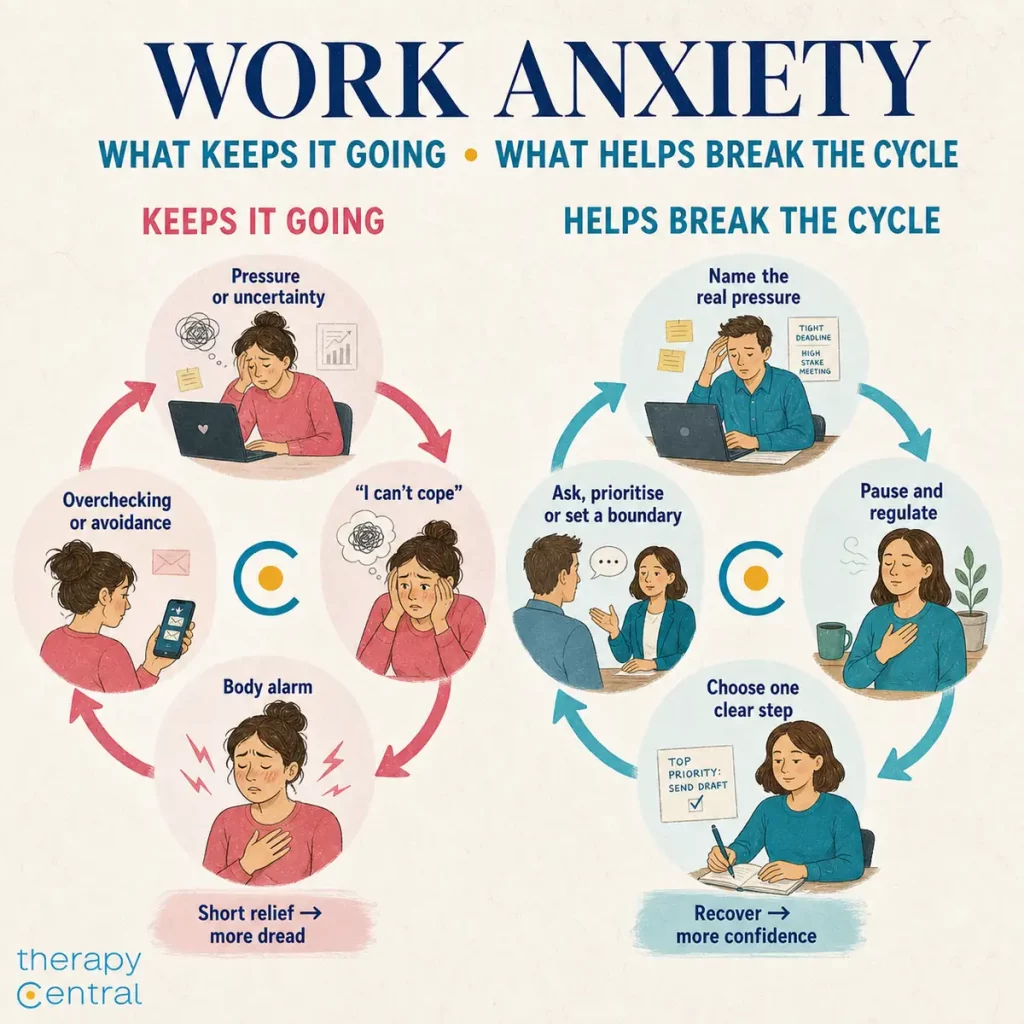
In simple terms, your brain has learned that work feels unsafe, overwhelming, or unpredictable. Anxiety is your body’s alarm system. When that alarm goes off too often, it can start ringing even before you step into the building.
That doesn’t mean your job is objectively “bad,” but it also doesn’t mean the problem is only in your head. Work anxiety often has real triggers: pressure, criticism, unrealistic workloads, or a role that doesn’t fit your strengths. [1] The goal is to understand what is driving the alarm – and how to lower it.
Anxious about work: common patterns
Many people who are anxious about work describe a mix of mental, emotional, and behavioural patterns. You might recognise some of these:
- running worst‑case scenarios before you even start
- over‑preparing or checking work repeatedly
- avoiding tasks that feel “high stakes”
- feeling shame after small mistakes
- needing constant reassurance that you are doing okay.
Many people also notice a people‑pleasing reflex: over‑apologising, saying yes to keep the peace, or hiding struggles to avoid being seen as difficult.
If you recognise yourself here, it doesn’t mean you are fragile. It means your system has been trying to cope with pressure and uncertainty.
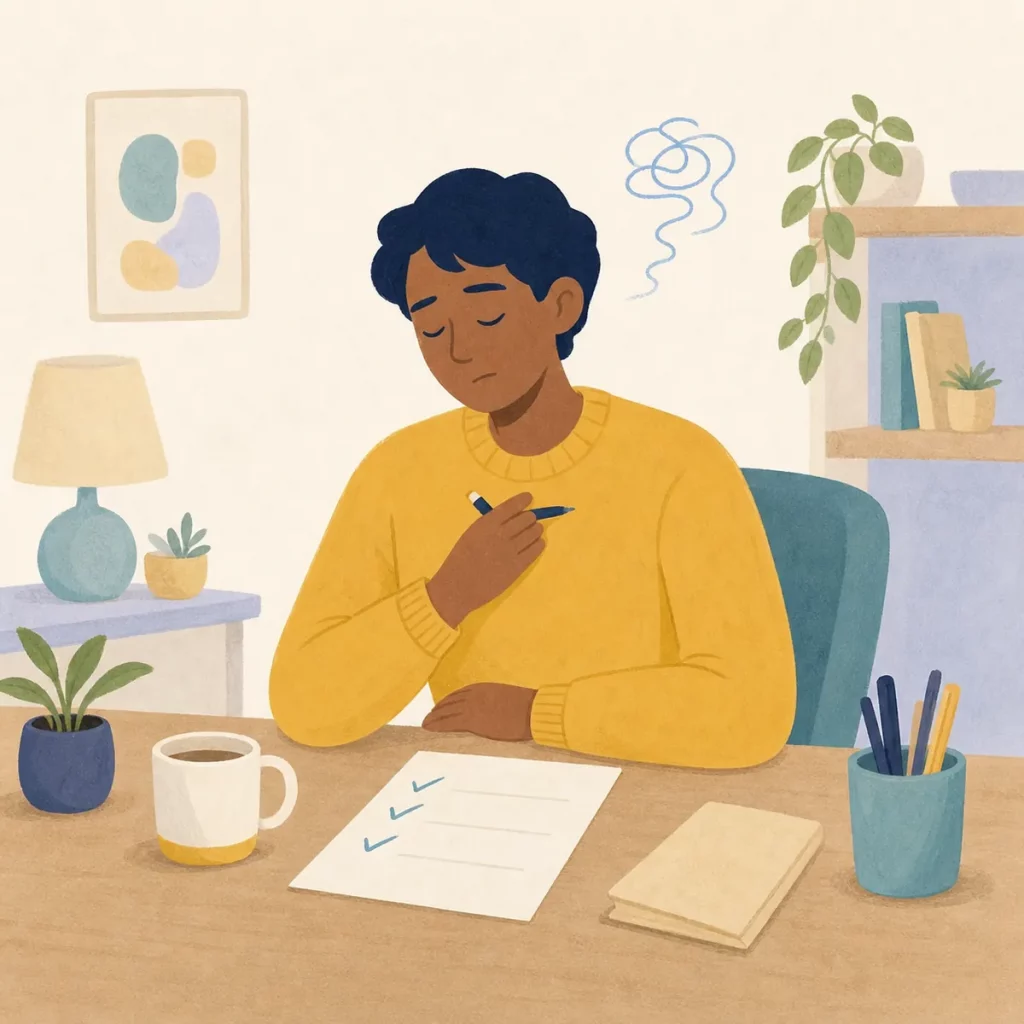
Some patterns are subtle. For example, you might notice you are always “on,” even at home. You can’t switch off, and you feel guilty resting. Over time, that chronic vigilance can keep anxiety high.
If this sounds familiar, it helps to remember: anxiety tries to protect you. The problem is that it protects you by keeping you on edge – which drains your energy and confidence.
Anxiety before work vs anxiety at work
Work anxiety doesn’t always look the same. For some people, the hardest part is the build‑up. For others, the anxiety peaks once they are already at their desk.
Think about a Monday morning: your body is tense before you even open your laptop, then the fear spikes again when you step into a meeting. Both moments are part of the same anxiety loop, just at different points.
Anxiety before work (anticipatory dread)
Anxiety before work often starts the night before or first thing in the morning. You might wake with a racing mind, or feel your body tense as you think about the day ahead. Common signs include:
- a surge of dread as you check your email
- nausea, tight chest, or shaky legs
- looping thoughts about meetings or deadlines
- the urge to cancel, call in sick, or stay in bed.
The anticipation can feel worse than the day itself because your mind fills in the gaps with worry.
Anxiety at work (in‑the‑moment spikes)
Anxiety at work often flares during specific moments: giving an update, joining a call, opening your inbox, or walking into a busy office. You might notice:
- a sudden spike of panic or self‑doubt
- difficulty concentrating or finding words
- irritability or emotional shutdown
- a feeling of being watched or judged.
Both patterns are real, and both can be addressed with the right tools.

Why work anxiety happens (causes and triggers)
There is rarely a single cause. Work anxiety usually comes from a mix of external stressors and internal beliefs. Common contributors include:
- High pressure or unrealistic workload. When expectations are constant and unclear, your nervous system never gets a break.
- Toxic workplace dynamics. Criticism without support, micromanagement, or conflict can make work feel unsafe.
- Perfectionism and fear of mistakes. If you believe mistakes equal failure, every task feels risky.
- Imposter syndrome. Feeling like you don’t belong can keep anxiety high, even if you are competent.
- Social anxiety at work. Meetings, open‑plan offices, or workplace politics can be overwhelming.
- Burnout. Chronic stress lowers resilience and makes ordinary tasks feel impossible.
- Past negative experiences. A previous toxic job or humiliating event can prime your brain to stay on guard.
- Role mismatch. The job may not fit your values, strengths, or energy levels.
Notice that some of these are “inside” factors and some are “outside” factors. That matters because the solution is often a blend of internal tools and external changes.

Physical symptoms of work anxiety
Work anxiety isn’t just mental. It shows up in the body, sometimes in ways that feel scary or confusing. Physical symptoms can include:
- tight chest or shortness of breath
- nausea, stomach pain, or loss of appetite
- headaches or jaw tension [2]
- shaky hands, sweating, or feeling hot and cold
- fatigue or brain fog
- racing heart or a sense of “adrenaline rush.”
These symptoms are your body’s stress response. They can ease when anxiety reduces, but while you are in them, they feel very real. If symptoms are severe or persistent, check in with a GP to rule out other causes and get reassurance.
When anxiety stops you from working
There are moments when anxiety isn’t just uncomfortable – it’s disabling. If you are too anxious to work, you might struggle to get out of bed, feel unable to leave the house, or freeze at your desk. Some people describe a full shutdown: their body simply won’t cooperate.
If you relate to “anxiety stopping me from working,” you aren’t failing. But that is often a sign that your system is overwhelmed. The most helpful response is usually to reduce pressure first and then rebuild capacity.
Practical first steps can include:
- Tell someone early. This could be a manager, HR, or trusted colleague. A simple “I’m struggling with anxiety and need a little support” is enough.
- Take a short reset if possible. Even a day or two can help your nervous system come down from red‑alert mode.
- Lower the bar, not your standards forever. Focus on small, doable tasks to rebuild momentum.
Seek support quickly. Anxiety can snowball when you keep it private. If work anxiety has stopped you from working more than once, it’s a strong sign to seek professional support.
In many cases, the next step is a conversation with your management about reducing pressure through clearer priorities or short-term adjustments. If you need words for that first conversation, try: “I’m dealing with anxiety that is affecting my work. I’m getting support, and I may need a temporary adjustment.” Keep it brief and focused on solutions. You don’t need to over‑explain.
Work stress vs anxiety disorder
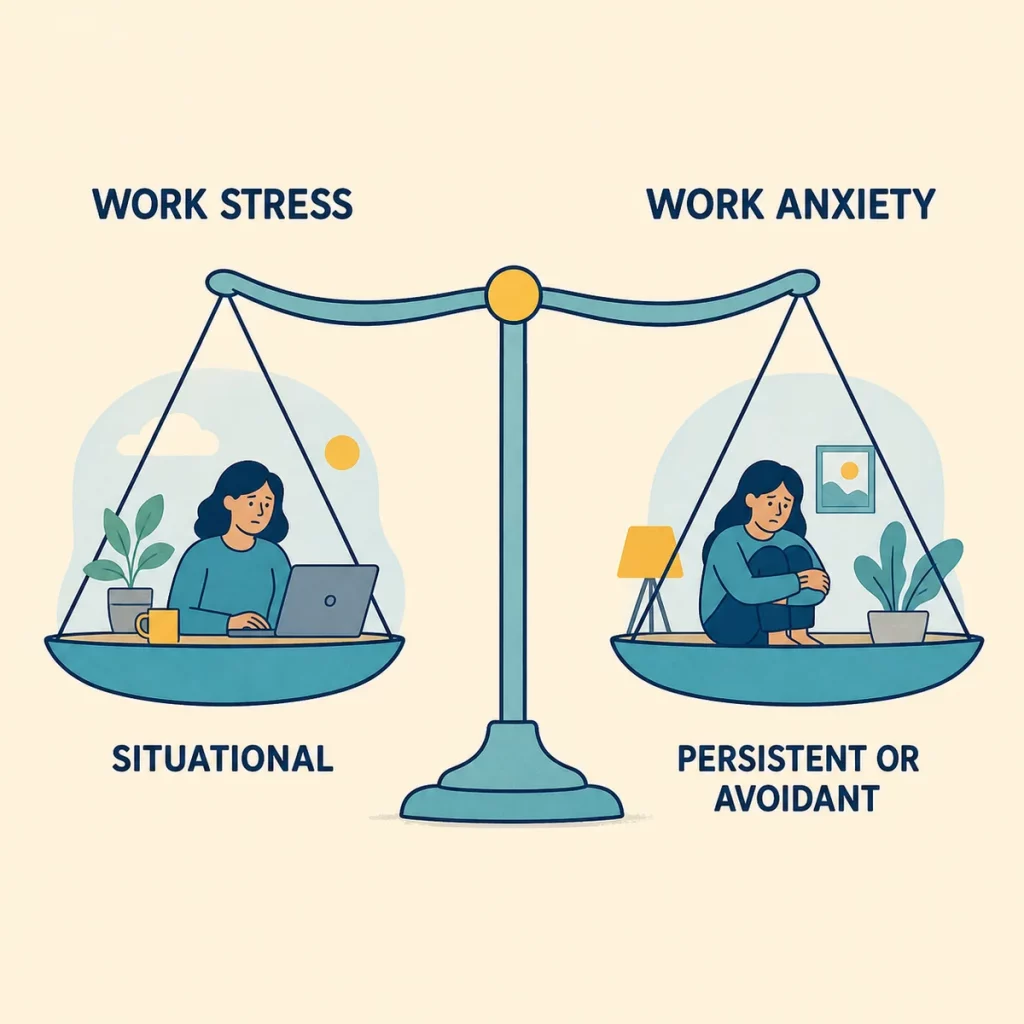
It can be hard to tell where stress ends and an anxiety disorder begins. This distinction helps you choose the right support.
Here is a simple comparison:
| Feature | Work stress | Work anxiety (or anxiety disorder) |
|---|---|---|
| Main trigger | Specific workload or situation | Ongoing fear of work or failure, even when demands shift |
| Duration | Short‑term or situational | Persistent, often weeks or months |
| Body response | Tense, tired, irritable | Panic symptoms, dread, avoidance, rumination |
| Relief | Improves with rest or workload change | Often persists even after breaks |
| Impact | Manageable with adjustments | Interferes with daily functioning and confidence |
A quick check‑in question is: if the work stressors eased tomorrow, would your anxiety drop quickly? If the answer is no, you may be dealing with a deeper anxiety pattern that needs more than time off.
You don’t have to diagnose yourself to get help. The point is to choose support that matches the level of impact you are feeling. [4]
How to cope with anxiety about going to work
Effective coping starts with calming your nervous system, rather than forcing yourself forward. The best strategies change the patterns that keep anxiety high and they are practical, small, and repeatable. Here is a simple breakdown of tools by timing:
| Before work | During work | After work |
|---|---|---|
| Gentle movement, protein breakfast, short walk | 60‑second breath reset, mini breaks, lower‑stakes tasks first | Body down‑shift (stretch, shower), boundary ritual, no email after X time |
| Plan top 3 priorities | Break tasks into 20‑minute chunks | Brief debrief: “What went okay today?” |
| Check in with a supportive person | Use noise‑reduction or focus cues | Do something that signals safety (music, warm drink) |
Quick grounding tools that actually help
- Name five things you can see. This pulls your brain out of spiral thinking and into the present.
- Slow your exhale. Try 4 seconds in, 6 seconds out, for 1-2 minutes.
- Set one realistic goal. Ask: “What is one thing I can complete in the next hour?”
Daily practices that lower baseline anxiety
- a consistent morning routine (light, hydration, food, movement)
- planning your day in small blocks, not one long to‑do list
- short breaks away from screens every 90 minutes
- clear end‑of‑day boundaries (even a 10‑minute “work off” ritual).
Communication and boundary scripts
If the environment is part of the problem, avoiding the conversation usually makes it worse. Clear, simple communication helps reset expectations. Scripts can help keep it simple:
- “I want to deliver good work, and I need clearer priorities to do that.”
- “I’m at capacity this week. Which task should I deprioritise?”
- “I can take this on, but I will need the deadline adjusted.”
You don’t need a perfect script. You need a short, steady one that protects your energy.
These tools work best when you use them consistently rather than perfectly. Pick two tools and see if you can repeat them daily for two weeks before adding more. If you need support building these habits, our Work and Career Stress Counselling services can help. You may also find this article on physical symptoms of stress useful.
Workplace accommodations and time off
If work anxiety is affecting your health, you may be able to ask for support at work. In the UK, many people can request reasonable adjustments when anxiety substantially affects daily functioning. [8] This might include flexible hours, temporary workload changes, or extra time for tasks.
You may also be eligible for Access to Work support for practical adjustments.
Examples of helpful accommodations include:
- adjusted start times during periods of acute anxiety
- quieter workspace or remote days
- structured priorities and fewer last‑minute changes
- clear written instructions instead of only verbal requests
If you are struggling, consider speaking with your GP. They can provide a fit note that recommends adjustments or time off when needed. [9] Some people benefit from short‑term leave to stabilise before returning with a plan. The goal is to make work sustainable while you recover.
When to seek therapy and support
If anxiety about going to work every day is persistent, intense, or damaging your confidence, therapy can help. Work‑focused CBT can address unhelpful thought patterns, while integrative therapy can explore deeper beliefs and past experiences that keep anxiety high. [5]
In therapy, we often look at both the inner pattern (perfectionism, fear of failure, self‑criticism) and the outer reality (workload, boundaries, culture). [6] That two‑part view helps you decide whether you need coping tools, workplace changes, or a bigger shift.
A typical therapy process starts with stabilising your nervous system, then builds practical skills (boundaries, cognitive reframes, exposure to feared tasks), and finally explores the deeper beliefs that keep anxiety stuck. It’s structured, compassionate, and focused on real‑life change.
If you want structured support, explore our Anxiety Therapy and CBT for Anxiety services. NHS Talking Therapies can also be a first point of access. [7]
Anxiety at work can feel isolating, but isn’t a life sentence. With the right support and practical steps, it can ease.
If you would like support, book a free 15-minute consultation, no strings attached.
FAQ
Why am I anxious about going to work every day?
Common reasons include workplace stress, burnout, fear of failure, toxic culture, or an underlying anxiety disorder. You might also be carrying past negative experiences that keep your nervous system on high alert.
What are the symptoms of anxiety at work?
Symptoms can include dread, racing thoughts, stomach tension, rapid heartbeat, sweating, and difficulty concentrating. Some people also notice irritability or the urge to avoid tasks.
What if I’m too anxious to work?
If anxiety stops you from working, consider short‑term time off, workplace adjustments, and professional support. Starting small and rebuilding confidence with realistic goals is often more sustainable than pushing through alone.
How do I cope with anxiety before work?
Grounding routines, planning, and short breathing exercises can reduce morning anxiety. A steady routine, clear priorities, and support from therapy can make mornings feel more manageable.
Can therapy help work anxiety?
Yes. Work‑focused CBT and anxiety therapy can reduce symptoms, build confidence, and help you address the deeper patterns behind work anxiety.