
You can care deeply about someone and still feel your chest tighten when they ask for more closeness. Your mind goes blank, your body wants to pull back, and the safest move suddenly feels like distance.
That push-and-pull can feel confusing for you and for the person who loves you.
In this guide, we’ll walk through avoidant attachment in relationships, why emotional distance develops, how it shows up in intimacy, and what genuinely helps. You’ll find practical exercises, relationship guidance, and a compassionate path forward – including when relationship counselling can help both partners move closer.

What is Avoidant Attachment in Relationships?
Avoidant attachment in relationships is a pattern where closeness feels unsafe, so a person relies on distance, self-reliance, or shutting down during emotional moments. It often develops from early emotional unavailability and can improve through awareness, communication, and therapy.
Avoidant attachment is one of the insecure attachment styles. [1] It’s a pattern where you protect yourself by keeping emotional closeness at a safer distance. That can look like needing lots of space, feeling uncomfortable with vulnerability, or withdrawing when feelings get intense.
Avoidant attachment is not a character flaw. It’s a protective strategy the nervous system learned early on. When intimacy rises, the body can flip into heat, tension, or an urge to escape. Sometimes it feels like irritation or boredom on the surface, even though the deeper signal is “this is too much, too soon.” Naming that inner experience shifts the focus from blame to compassion.
If you want the wider context, our guide to Attachment Styles can help. It shows how avoidant patterns fit into the bigger picture.
How Does Avoidant Attachment Develop?
Avoidant attachment is associated with early experiences of less consistently sensitive or emotionally available caregiving. [2] This can happen in homes that feel caring on the surface but where emotions are dismissed, minimised, or seen as a weakness.
For example, a child who is told to stop crying or is praised only for independence may learn to rely on themselves and keep feelings private. Over time, that self-reliance becomes a default. It is a smart survival strategy for the past, but in adult relationships it can create distance and misunderstanding.
Think of it like a smoke alarm set to “silent.” The system still detects heat, but it has learned that sounding the alarm is not safe. So instead of signalling distress, the person goes quiet, withdraws, or changes the subject.
Sometimes the message is indirect rather than harsh. A parent might be loving but busy, uncomfortable with emotion, or quick to solve problems instead of sitting with feelings. In many UK homes, phrases like “keep a stiff upper lip” or “pull yourself together” are meant kindly, yet they still teach a child that needing comfort is risky or unwanted. Over time, the nervous system learns to rely on distance, even when the adult mind wants connection.
Dismissive-Avoidant vs Fearful-Avoidant: Key Differences
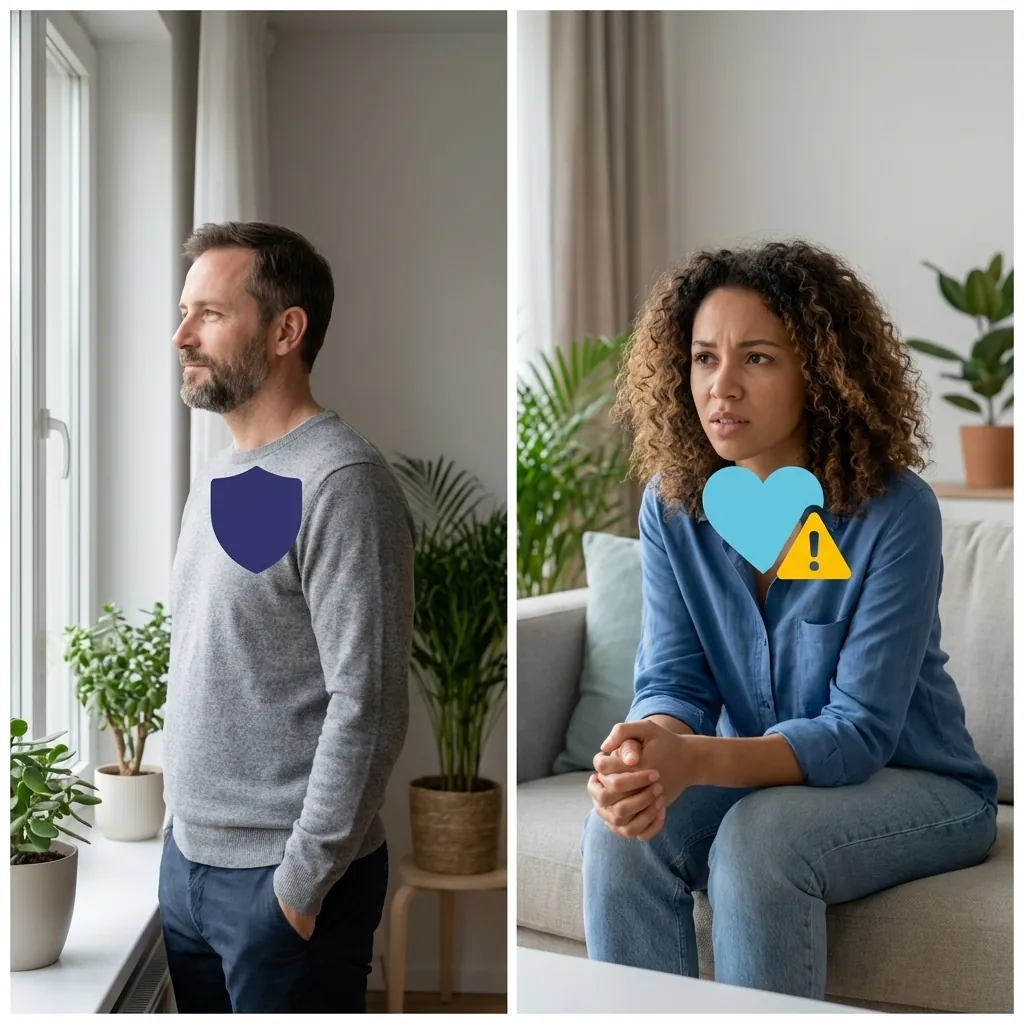
Not all avoidant patterns are the same. Two common subtypes are dismissive avoidant attachment and fearful avoidant attachment. [3] Both involve discomfort with closeness, but the emotional experience underneath can be quite different.
Dismissive Avoidant Attachment
Dismissive avoidant attachment in relationships often looks calm and self-sufficient. The person may value independence, downplay emotional needs, and feel uncomfortable when a partner seeks deeper closeness. They often believe they do not need much support and may describe emotions as “not a big deal.”
Fearful Avoidant Attachment
Fearful avoidant attachment involves both a desire for intimacy and a fear of it. People with this pattern may move toward closeness and then quickly pull away. They can feel emotionally torn: “I want this, but it feels unsafe.” This creates a confusing cycle for both partners.
Both patterns can look like “distance” on the outside, but they feel different on the inside. Knowing which profile fits helps you choose the right pace and the right kind of support:
| Feature | Dismissive-Avoidant | Fearful-Avoidant |
|---|---|---|
| Core drive | Protect independence | Protect from rejection and overwhelm |
| Inner experience | Calm, detached, self-reliant | Anxious, conflicted, hypervigilant |
| Relationship behaviour | Withdraws, avoids emotional talks | Approaches then distances |
| Growth focus | Tolerate vulnerability | Build safety and trust |
Signs of Avoidant Attachment in Relationships
Avoidant patterns can be subtle, especially early on. Here are some common signs of avoidant attachment in relationships that partners often notice.
- Pulling away after closeness or intimacy (the sudden urge to shut down)
- Avoiding emotionally charged conversations (tight chest, mind goes blank)
- Keeping feelings private or minimising their importance
- Preferring practical support over emotional support
- Feeling smothered or “engulfed” when a partner wants connection
- Saying “I do not need anyone” while still wanting closeness
These signs can create emotional distance in relationships, even if there is affection and care. The distance often protects the avoidant person from vulnerability, but it can leave the partner feeling confused or rejected.
Inside, the avoidant person may feel a spike of tension, a rush of heat, or an urge to escape when intimacy rises. They might not label it as fear. It can feel like irritation, boredom, or a need to fix something practical. These body cues are important signals that closeness is touching a sensitive spot, not a sign that the relationship is wrong.
How Avoidant Attachment Affects Relationship Dynamics
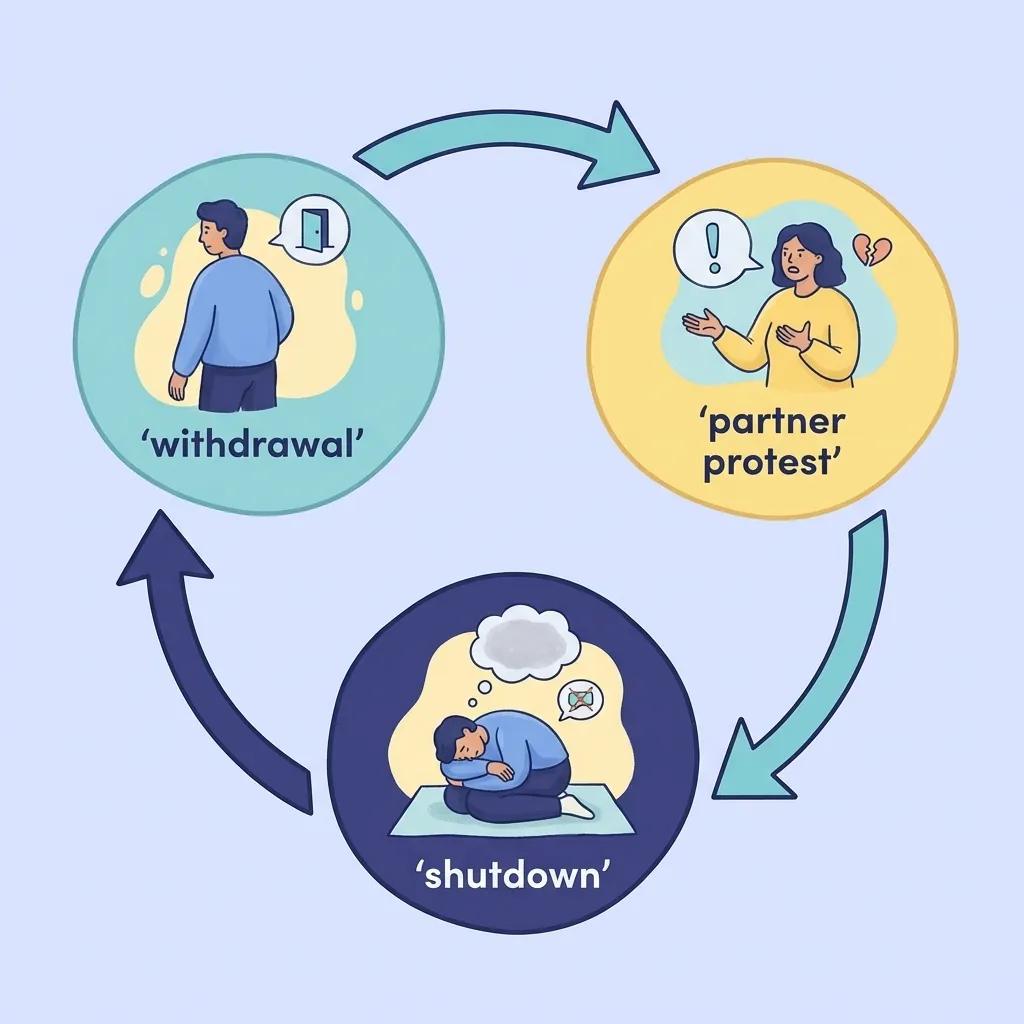
In many couples, avoidant attachment triggers an anxious-avoidant relationship cycle. One partner reaches for closeness, the avoidant partner pulls back, and the distance then increases the other partner’s anxiety. This can become a loop of pursuit and withdrawal that chips away at relationship satisfaction. [4]
This is not about one person being “the problem.” It is a dynamic that needs understanding and adjustment from both sides. When both partners learn to see the cycle, they can interrupt it with new responses.
Imagine this scenario: one partner asks for a deeper talk after a busy week. The avoidant partner feels pressured, goes quiet, and focuses on chores. The other partner then feels dismissed and raises their voice, which confirms the avoidant person’s sense that emotions lead to conflict. Naming this pattern early can reduce blame and create a plan for calmer reconnection.
If you’re in this cycle, relationship counselling can help both partners feel safer and more connected.
If that cycle sounds familiar, it is not stubbornness or lack of care. That’s protection, and it can change at the right pace.
Why Avoidant Patterns Are Hard to Change
Avoidant strategies are often ego-syntonic, which means they feel normal or even helpful to the person using them. If emotional distance has kept someone safe for years, it makes sense that they would rely on it.
Avoidant patterns also involve what therapists call deactivating strategies. [5] These are protective moves that reduce closeness and bring short-term relief. Examples include:
- Focusing on a partner’s flaws to justify distance (a quick sense of control)
- Shifting attention to work or hobbies when things feel intense
- Changing the subject when feelings come up
- Minimising their own needs to avoid depending on others (and feeling exposed)
Changing these patterns takes more than just “trying harder.” It involves learning new emotional skills and building a sense of safety with closeness.
Another barrier is identity. If someone has always been “the independent one,” asking for support can feel like losing themselves. The body can interpret closeness as danger, so even positive moments trigger withdrawal. This is why progress often looks like small, steady experiments rather than a sudden emotional shift.
Healing Avoidant Attachment: Therapy and Self-Help
Many people do move toward earned security with steady effort and support.
Therapies that often help include:
- Attachment-focused therapy, which explores early patterns and repairs relationship expectations
- Emotionally Focused Therapy (EFT), which builds emotional safety and secure bonding. [6]
- CBT, which challenges unhelpful beliefs such as “I must handle everything alone”. [7]
- Schema or IFS-informed work, which helps integrate vulnerable parts and reduce shame
In practice, an integrative therapist blends these approaches based on your history, pace, and what feels safe.

Self-help can help too, especially when paired with therapy. The key is to build tolerance for closeness slowly and consistently, not all at once.
Therapy also provides a safe practice space. A good therapist will move at a pace that feels respectful, helping the person notice triggers, tolerate small doses of vulnerability, and repair moments of disconnection. Over time, these experiences build a new internal template: closeness can be safe and manageable.
If emotional regulation feels difficult, the skills we use in Emotional Regulation Support can be useful here too.
Practical Exercises to Build Emotional Closeness Safely
If you’re open to trying this, think of the steps below as small experiments you can repeat and slow down as needed. The goal is gentle exposure to closeness, not forcing yourself to feel more than you can manage.
- Name the feeling early: Try naming what you feel in small moments. “I feel tense” is enough.
- Share one small truth: Choose a low-risk disclosure each week, such as a worry or preference.
- Use time-limited check-ins: Set a 10-minute check-in for emotional talk, so it feels contained.
- Ground before you respond: Use a quick 5-4-3-2-1 grounding scan or notice your feet on the floor before replying.
- Link to values: Ask, “What kind of partner do I want to be in this moment?” and take one small action aligned with that.

Here’s a quick comparison of deactivating strategies and secure alternatives:
| Deactivating Strategy | Secure Alternative |
|---|---|
| “I do not need anyone” | “I can accept support without losing myself” |
| Avoiding the conversation | Naming one feeling and staying present |
| Focusing on flaws | Noticing one thing you appreciate |
| Shutting down | Taking a short pause, then returning |
Many people find it helpful to agree on a “repair phrase” after a shutdown, such as “I need a pause, but I am still here.” This keeps connection intact while giving space. Consent and pacing matter; closeness works best when both people know what to expect.
Supporting a Partner With Avoidant Attachment
If you’re wondering how to deal with avoidant attachment in relationships as the partner, start with clarity and consistency. Avoidant partners often feel safest when the relationship is predictable and non-pressured.
Helpful approaches include:
- Use clear, calm requests rather than hints or criticism
- Give space after conflict, but name when you will reconnect
- Avoid chasing when they shut down, and focus on your own grounding
- Celebrate small steps toward closeness rather than expecting a full shift overnight

For example, you might say: “I care about you and I’m not going anywhere. Let’s take a breather and check back at 8pm.” This keeps space and connection without chasing.
Partners need their own support too. If you are feeling lonely or overwhelmed, you may benefit from a separate space to process. Intimacy Issues Therapy can help couples explore closeness without blame.
When to Seek Professional Help
If avoidant patterns are creating ongoing distress, professional therapy can help. It can offer a safe, structured environment to explore feelings, learn emotional skills, and build trust. [8] This is especially important if past trauma, chronic anxiety, or repeated relationship breakdowns are involved. Attachment insecurity is also linked with poorer mental health outcomes. [9] Needing support does not mean you are broken; it means this matters.
In the UK, people often worry they are overreacting or that therapy is only for crisis. In reality, early support can prevent patterns from hardening. Sessions may be online or in person depending on location, and a good therapist will work at a pace that respects autonomy while gently exploring closeness.
If you’re ready to explore this with support, book a free 15-minute consultation to build safer connection at your pace. It can be a gentle first step.
Avoidant attachment in relationships is understandable, and it can change. With compassionate insight, practical tools, and consistent support, many people move toward closer, more secure relationships.
FAQ
How do avoidant attachments act in relationships?
They often keep emotional distance, downplay needs, and withdraw during conflict or intimacy. This can look like shutting down, changing the subject, or prioritising independence over closeness, even when they care deeply.
How to deal with a partner with avoidant attachment?
Use calm, specific requests, respect their need for space, and avoid chasing during shutdowns. Encourage gentle connection and consistency, and focus on your own boundaries so the relationship stays balanced.
Can a relationship work with avoidant attachment?
Yes, when both partners build awareness, communicate needs clearly, and develop skills for safe closeness. Progress is usually gradual and works best with a shared commitment to change and support.
What activates avoidant attachment?
Triggers often include feeling criticised, pressured, or overwhelmed by emotional intensity. Situations that signal loss of control or fear of engulfment can activate distancing or shutdown behaviours.
What are signs of avoidant attachment?
Common signs include discomfort with vulnerability, minimising needs, pulling away after closeness, and strong self-reliance. In relationships it can show as limited emotional sharing, avoidance of conflict, or shutting down when things feel intense.
How do avoidants show love?
They may show love through practical support, reliability, or acts of service rather than overt emotional expression. Consistency, keeping promises, and making time in low-intensity ways can be their way of showing care.