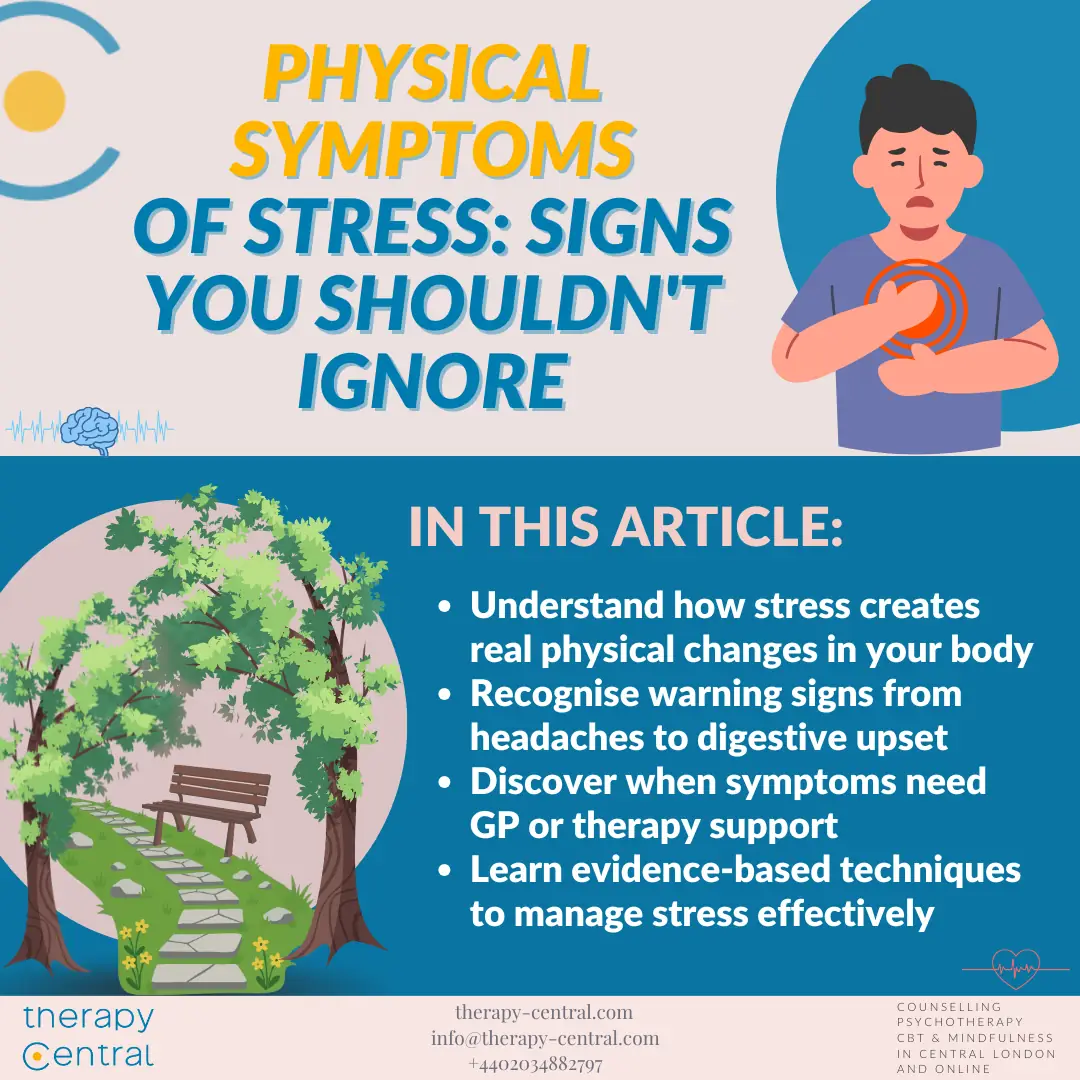
Your chest feels tight, your head aches constantly, and your stomach is in knots, yet every medical test comes back normal. If this sounds familiar, you’re not alone.
Stress doesn’t just live in your mind; it creates real, measurable changes throughout your body. In the UK, workplace stress alone affects 776,000 workers annually, leading to 16.4 million working days lost 1. Recognising these physical symptoms early can help you take action before stress becomes overwhelming.
With the right support and a bit of awareness, you can regain control and start feeling like yourself again.
What Are Physical Symptoms of Stress?
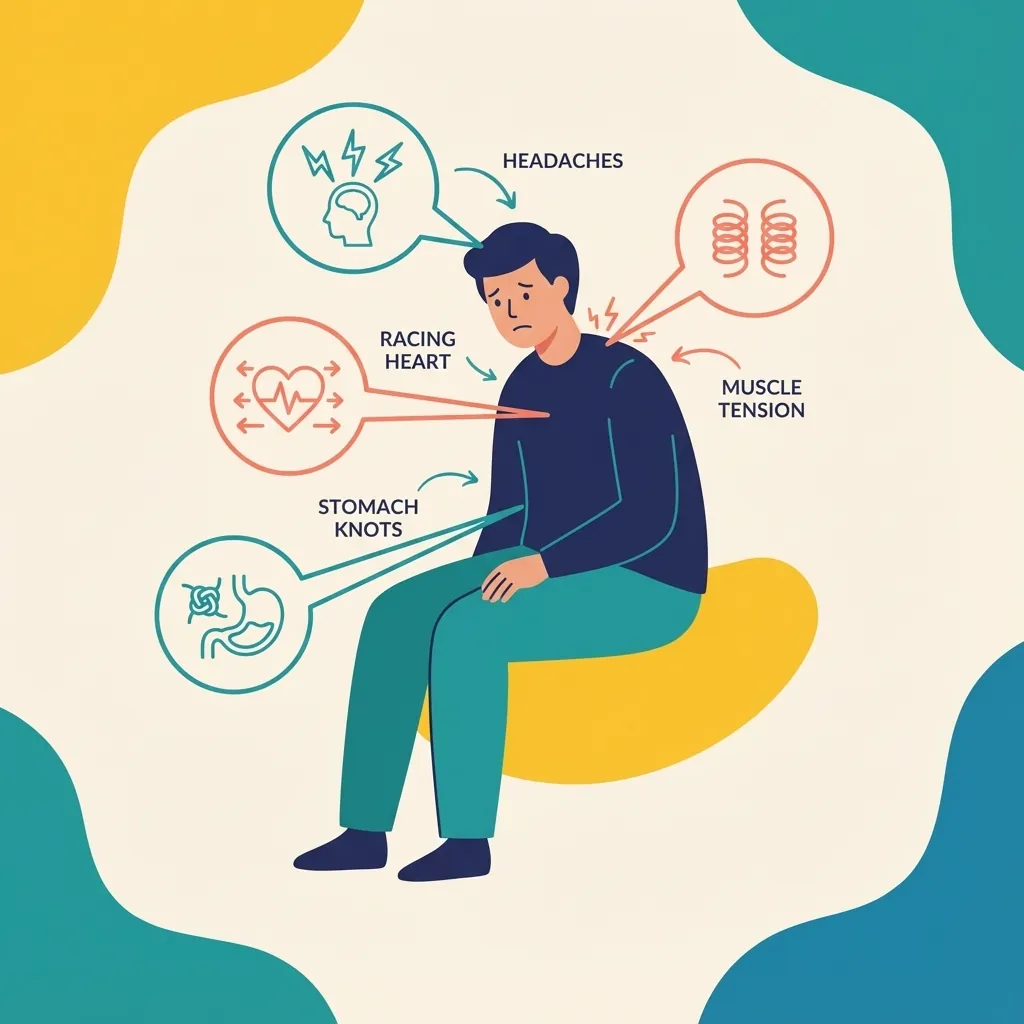
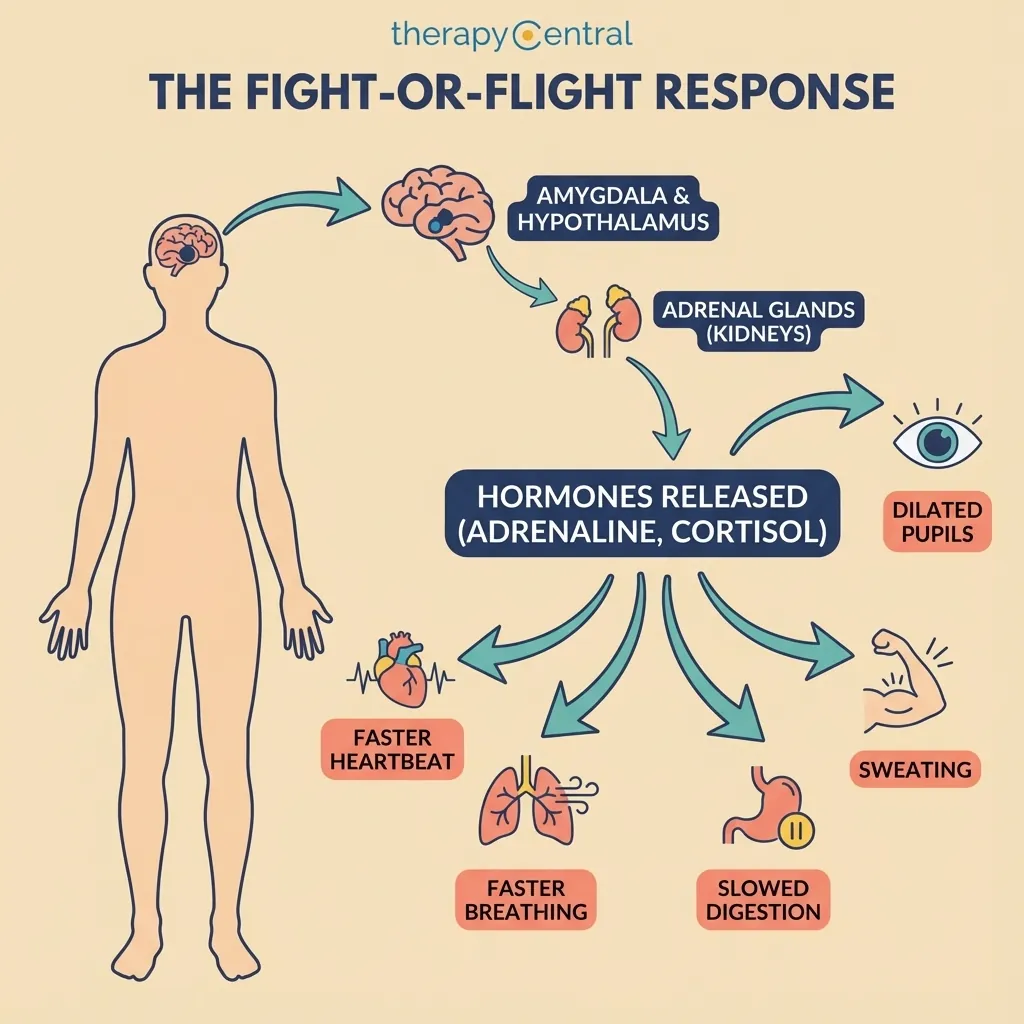
Common physical symptoms of stress include persistent headaches, muscle tension (especially neck and shoulders), digestive issues, chest tightness, rapid heartbeat, fatigue, sleep disturbances, and weakened immunity. These occur because stress activates your fight-or-flight response, releasing cortisol and adrenaline that prepare your body for danger.
Understanding Your Body’s Stress Response
When you encounter a stressful situation, your brain’s amygdala signals an alarm. This triggers your hypothalamic-pituitary-adrenal (HPA) axis, releasing stress hormones like cortisol and adrenaline into your bloodstream 2. These hormones redirect energy to your muscles, sharpen your focus, and increase your heart rate. Your body can’t distinguish between a genuine threat and everyday stressors, so it produces the same physiological cascade whether you’re facing a work deadline or an actual emergency.
Common Physical Symptoms of Stress You Shouldn’t Ignore
So we’ve covered what’s happening inside. But what does stress actually feel like day-to-day?
Physical stress symptoms range from mildly uncomfortable to genuinely alarming. What matters isn’t just the symptom itself, but its persistence, severity, and impact on your daily life.
Muscular and Skeletal Symptoms
- Jaw tension so tight you wake with aching teeth.
- Lower back pain without injury.
- Teeth grinding (bruxism), especially during sleep.
- Tension headaches that feel like a band tightening around your skull.
- Shoulders permanently up by your ears, even when you’re trying to relax.
Cardiovascular and Respiratory Symptoms
- Heart pounding in your ears during a routine conversation.
- Chest tightness or discomfort that makes you worry.
- Shallow, rapid breathing or feeling short of breath.
- Elevated blood pressure.
Digestive System Symptoms
- That churning stomach when you think about tomorrow’s meeting.
- Loss of appetite or stress eating you can’t seem to control.
- Irritable bowel syndrome (IBS) flare-ups.
- Heartburn or acid reflux, especially at night.
Immune and Systemic Symptoms
- Frequent colds or infections (your body just can’t fight them off).
- Persistent fatigue despite adequate sleep.
- Unexplained weight loss or gain.
- Skin issues (eczema, psoriasis, acne flare-ups).
Neurological and Sleep-Related Symptoms
- Lying awake at 2am, replaying conversations or worrying about what’s next.
- Racing thoughts that prevent rest.
- Dizziness or light-headedness.
- Difficulty concentrating or memory problems.
Many people find these symptoms frustrating precisely because they feel physically unwell yet can’t identify a clear medical cause.

How Stress Affects Different Body Systems
Now that you’ve got the symptom picture, let’s look at what’s actually happening inside your body. Stress doesn’t affect everyone identically; your genetic makeup, past experiences, and current health all influence where stress shows up most. Understanding which systems stress targets helps you connect your symptoms to their root cause:
| Body System | Common Symptoms | Why It Happens |
|---|---|---|
| Cardiovascular | Rapid heartbeat, chest tightness, high blood pressure | Adrenaline increases heart rate and constricts blood vessels to deliver oxygen quickly to muscles 3 |
| Digestive | Nausea, IBS, appetite changes, heartburn | Cortisol diverts blood away from digestion; stress alters gut bacteria 4 and increases stomach acid production |
| Musculoskeletal | Muscle tension, headaches, jaw clenching, back pain | Muscles tense reflexively during stress response; chronic tension causes inflammation and pain |
| Immune | Frequent infections, slow healing, inflammation | Prolonged cortisol suppresses immune function, reducing white blood cell activity 5 |
| Neurological | Headaches, dizziness, concentration difficulties | Stress hormones affect neurotransmitter balance; reduced blood flow to non-essential brain regions |
| Respiratory | Rapid breathing, shortness of breath, asthma exacerbation | Fight-or-flight response increases breathing rate; existing respiratory conditions worsen under stress |
The Connection Between Chronic Stress and Physical Health
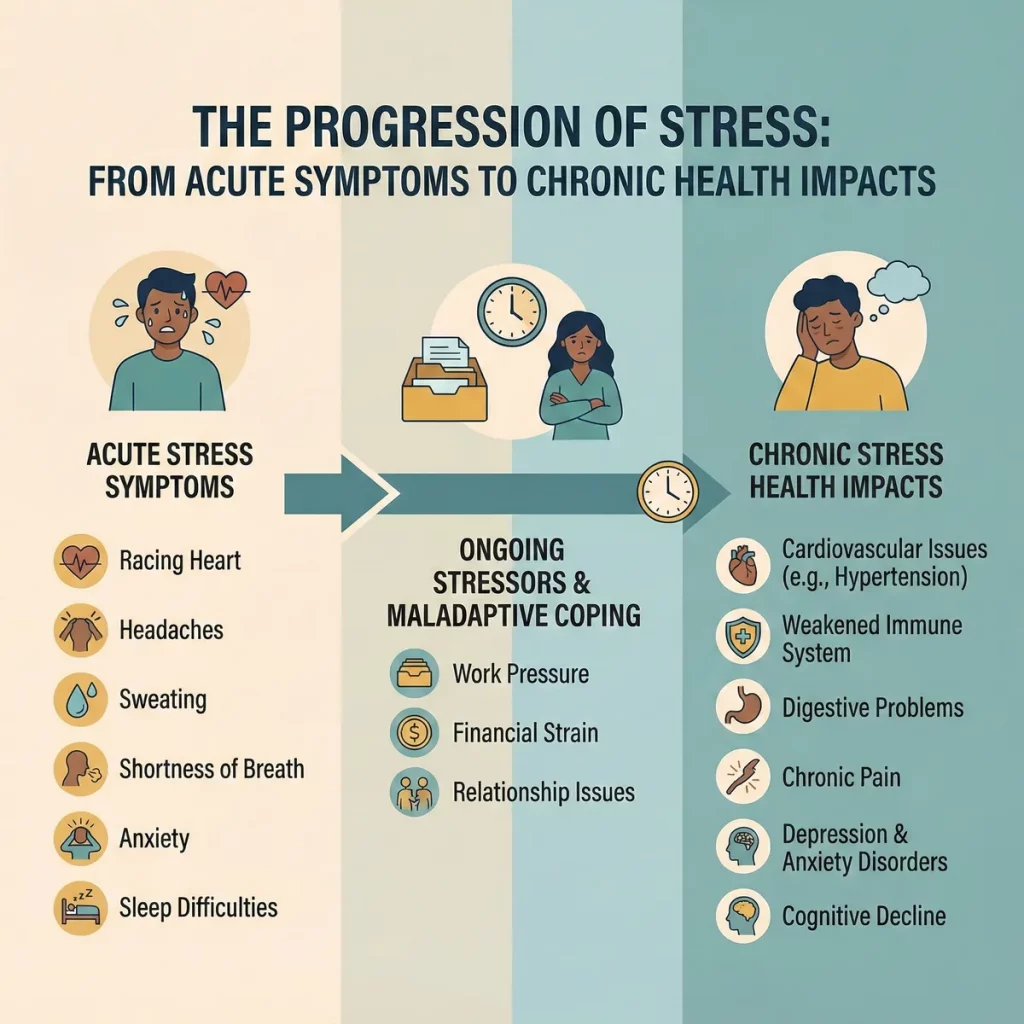
You experience acute stress before a presentation, and it fades within hours or days. Chronic stress? That keeps your system on high alert for weeks, months, even years – fundamentally changing how your body works.
From Acute to Chronic: The Progression Timeline
What does that look like in practice? Chronic stress means waking already tense, your shoulders up by your ears before you’ve even checked your phone. It’s cortisol coursing through you all day, every day, long after the deadline passed or the argument ended. Your HPA axis stays activated continuously, flooding your system with cortisol long after it’s useful 6.
Long-Term Health Consequences
Research consistently links chronic stress to serious health conditions. Persistently elevated cortisol contributes to cardiovascular disease, metabolic disorders, chronic pain conditions, mental health deterioration, and immune dysfunction 7. This isn’t meant to frighten you – it’s to emphasise that physical stress symptoms deserve attention.
Recognising When Stress Becomes Anxiety or Burnout
Stress, anxiety, and burnout share overlapping symptoms, which often confuses people seeking help. If you’re noticing persistent worry alongside physical symptoms, it’s worth understanding whether you’re dealing with stress, burnout, or anxiety that needs specific support. Here’s a side-by-side comparison of all three:
| Condition | Physical Symptoms | Duration/Pattern | Primary Emotional State | Recommended Support |
|---|---|---|---|---|
| Stress | Racing heart, muscle tension, digestive upset | Hours to weeks; linked to specific stressors | Feeling overwhelmed, pressured | Self-care strategies, stress management techniques, therapy if persistent |
| Anxiety | Rapid heartbeat, sweating, trembling, difficulty breathing | Persistent; may occur without clear trigger | Excessive worry, fear, apprehension | GP assessment, CBT, medication if appropriate 8 |
| Burnout | Chronic fatigue, frequent illness, physical exhaustion | Months; gradual onset | Emotional numbness, cynicism, detachment | Workplace changes, therapy, potential time off work |
The key difference? Stress produces hyperactivation, while burnout represents complete depletion.
The Vicious Cycle: How Physical Symptoms Worsen Stress
Here’s the thing: physical symptoms often increase your stress levels, creating a self-perpetuating loop. Your chest tightens. Immediately, your mind races: Is this my heart? Should I call someone? That worry spikes your anxiety, which makes your chest tighten more. And the cycle spins.
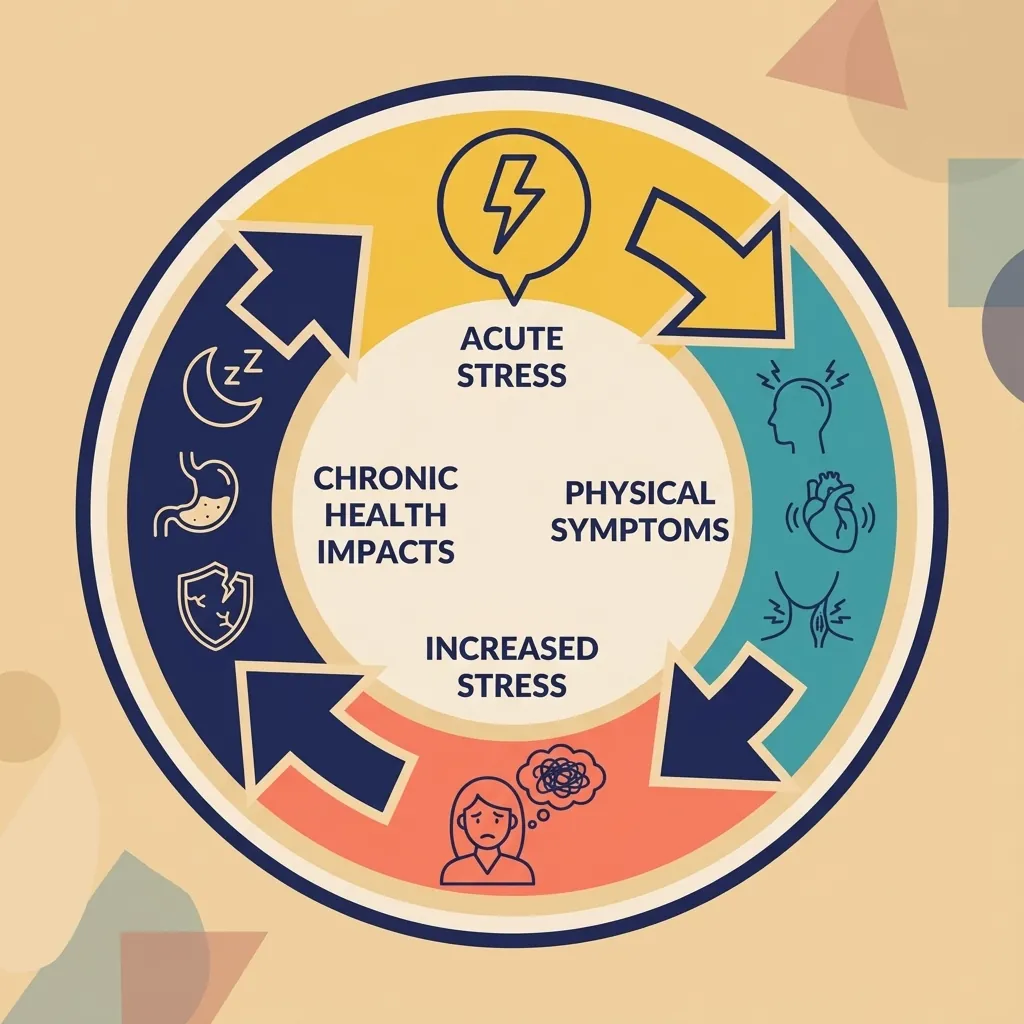
Our qualified and experienced therapists and psychologists understand this pattern. Clients find themselves caught in this loop, where their symptoms frighten them, which intensifies the symptoms, which deepens the fear. CBT approaches help by addressing both the physical symptoms (through relaxation techniques, breathing exercises) and the worry they generate (through cognitive restructuring) 9.
When Physical Symptoms of Stress Require Professional Help
Most stress symptoms improve with self-care strategies and lifestyle changes. However, certain warning signs indicate you should seek professional support sooner.
Red Flags: When to Contact Your GP Urgently
Seek immediate medical attention (GP, NHS 111, or A&E) if you experience severe chest pain, sudden severe headache, unexplained rapid weight loss, persistent vomiting, significant changes in bowel habits lasting more than two weeks, or physical symptoms accompanied by suicidal thoughts (call Samaritans on 116 123 immediately).
Most stress symptoms don’t reach this level, but if you’re uncertain, it’s always safer to check.
When to Book a GP Consultation
Schedule a GP appointment if:
- physical symptoms persist beyond two weeks despite self-care efforts or interfere significantly with work or daily activities
- you’re relying on alcohol or drugs to cope
- sleep problems continue for more than a month
- you experience frequent panic attacks
- symptoms worsen progressively 10.

Distinguishing Between Medical and Stress-Related Symptoms
Physical stress symptoms genuinely mimic serious medical conditions. Chest tightness could indicate cardiac issues or panic attacks. The safest approach: always investigate new, persistent, or severe symptoms medically first.
Evidence-Based Strategies to Manage Physical Stress Symptoms
Now that we’ve covered what symptoms look like and when to seek help, let’s talk about what actually works. Managing physical stress symptoms requires immediate techniques to calm your nervous system when symptoms flare, and longer-term strategies to reduce overall stress load.
Immediate Symptom Relief Techniques
Progressive Muscle Relaxation (PMR)
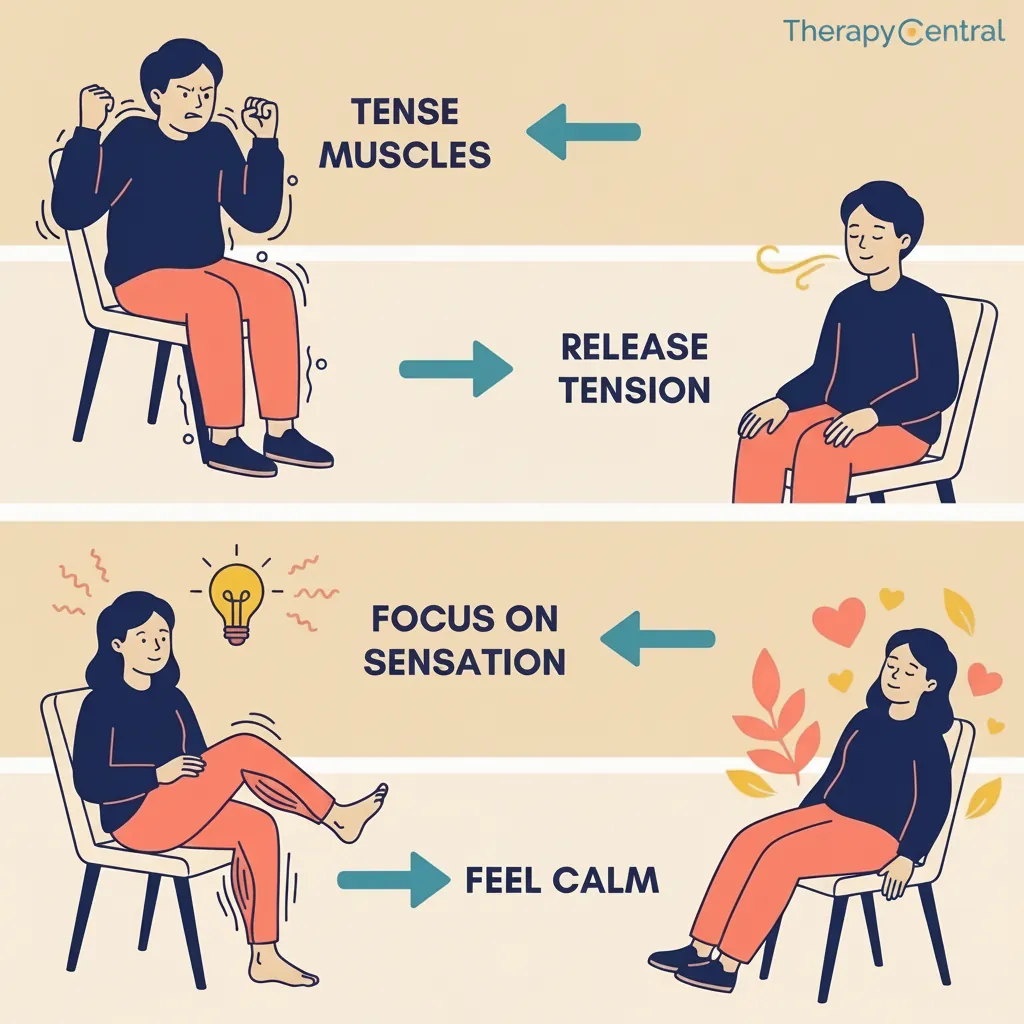
This technique systematically releases muscle tension by deliberately tensing then relaxing muscle groups. Research shows PMR significantly reduces physical stress symptoms within 10-15 minutes 11. Find a comfortable position – sitting or lying down works equally well. Start with your feet: tense those muscles firmly, hold that tension, then let it all go. Notice the contrast between tension and release. Work your way up through your body, pausing at each muscle group.
Controlled Breathing (4-7-8 Technique)
When stress activates rapid, shallow breathing, deliberately slowing your breath signals safety to your nervous system. Our article on relaxation techniques explores this in detail: breathe in through your nose for 4 counts, hold for 7 counts, exhale slowly through your mouth for 8 counts, repeat 4-8 cycles 12.
Grounding Techniques (5-4-3-2-1 Method)
When physical symptoms escalate into panic, grounding reconnects you to the present moment. Name 5 things you can see, 4 things you can touch, 3 things you can hear, 2 things you can smell, 1 thing you can taste.
Long-Term Stress Management Approaches
Cognitive Restructuring for Stress Appraisals
CBT recognises that stress intensity depends partly on how you interpret situations. Identify the stressor, notice your thoughts, examine the evidence, generate alternatives, and choose a balanced thought. Challenging negative thinking patterns reduces both emotional and physical stress responses.
Pacing and Activity Scheduling
Chronic stress often stems from unsustainable activity levels. Break large tasks into smaller chunks, schedule regular breaks, alternate demanding tasks with lighter activities, and protect time for restorative activities.
Movement and Gentle Exercise
Physical activity metabolises stress hormones, releases endorphins, and reduces muscle tension 13. A 15-minute walk around the block – even in your work clothes, even when it’s drizzly – can shift your nervous system in ways an hour of scrolling never will. Effective options include daily walks (especially in green spaces), yoga or tai chi, swimming, or any activity you genuinely enjoy.
Sleep Hygiene and Restoration
Poor sleep intensifies physical stress symptoms, while stress disrupts sleep. Picture your bedroom as a sanctuary: cool enough that you need a blanket, dark enough that you can’t see your hand, quiet except for maybe the hum of a fan. If sleep difficulties persist, read our guide on improving sleep habits. Evidence-based sleep hygiene includes consistent sleep and wake times, wind-down routine starting 60 minutes before bed, no screens for 30-60 minutes before sleep, and avoiding caffeine after 2 p.m.
Building Self-Compassion Instead of Self-Criticism
Many people respond to stress symptoms with harsh self-judgement: “I should be able to handle this.” Self-criticism treats yourself as a problem to be fixed and increases shame. Self-compassion acknowledges struggle with kindness, recognises shared human experience, and reduces stress response 14.
Practical Self-Compassion Exercise
When physical symptoms appear and you notice self-critical thoughts, try the following:
- pause and acknowledge (“I’m experiencing stress symptoms right now”)
- normalise (“Many people experience this”)
- offer kindness (“What do I need right now?”)
- take supportive action.
Speak to yourself the way you’d speak to a friend who’s struggling – without the harsh judgements.
Successfully managing physical stress symptoms doesn’t mean they’ll never return. But you’ll recognise symptoms earlier, understand their meaning better, and implement effective strategies before they escalate. Here’s a short cheat sheet for you to keep at hand:
| Symptom Category | Immediate Strategy | Long-Term Approach | Useful Resource Link |
|---|---|---|---|
| Muscle Tension | Progressive muscle relaxation, warm bath, gentle stretching | Regular movement, posture awareness, massage therapy | Work Stress Counselling |
| Rapid Heartbeat/Breathing | 4-7-8 breathing, grounding techniques | Cardiovascular exercise, anxiety therapy | Anxiety Therapy |
| Digestive Upset | Paced eating, warm drinks, gentle movement | Dietary review, gut-directed hypnotherapy, stress reduction | Stress Management Support |
| Sleep Problems | Wind-down routine, no screens, bedroom environment optimisation | Sleep hygiene consistency, CBT for insomnia | CBT Therapy |
| Fatigue | Short rest breaks, gentle activity, hydration | Pacing strategies, activity scheduling, energy conservation | Free 15-Min Consultation |
Three Relapse-Prevention Strategies
- Establish a baseline symptom awareness: Notice your “early warning signs” – subtle symptom changes that indicate stress building. Recognising these signals early allows prompt intervention before symptoms become severe.
- Maintain your toolkit during calm periods: Don’t abandon helpful strategies when symptoms improve. Regular breathing practice, consistent sleep routines, and scheduled downtime prevent symptom return more effectively than reactive crisis management.
- Review and adjust your stress load periodically: Every few months, honestly assess your commitments, boundaries, and lifestyle sustainability. Early course corrections prevent the accumulation of stress that eventually produces physical symptoms.
Physical stress symptoms are your body’s way of communicating that something needs attention. Whether that’s reducing external stressors, improving coping strategies, addressing unhelpful thought patterns, or seeking professional support, you have options.
At Therapy Central, our qualified and experienced therapists and psychologists understand the mind-body connection that creates and maintains stress symptoms. We offer integrative, evidence-based care drawing from CBT, acceptance and commitment therapy, compassion-focused approaches, mindfulness practice, and modern psychodynamic insights – tailoring what we use to what you need.
If you’re experiencing persistent physical stress symptoms that interfere with your daily life, professional support can help you understand what’s happening and develop effective management strategies. We offer flexible appointment times – early morning to late evening, including weekends – to fit your schedule.
Book a free 15-minute consultation to discuss how we can help you address your stress symptoms and build lasting resilience.
FAQ
Can stress cause physical pain without any medical condition?
Yes. Stress triggers muscle tension, inflammation, and nervous system changes that create real physical pain (especially headaches, back pain, and digestive discomfort) even without underlying medical conditions. Your brain’s stress response produces genuine physical symptoms.
How long do physical symptoms of stress typically last?
Acute stress symptoms usually resolve within hours to days after the stressor passes. Chronic stress symptoms persist for weeks or months, often worsening over time without intervention. Duration depends on stress intensity and coping strategies employed.
When should I see a GP about stress-related physical symptoms?
Consult your GP if symptoms persist beyond two weeks, interfere with daily functioning, worsen progressively, or include chest pain, severe headaches, or unexplained weight changes. Always rule out medical conditions before attributing symptoms solely to stress.
Can physical symptoms of stress be a sign of anxiety?
Yes. Stress and anxiety share many physical symptoms – rapid heartbeat, muscle tension, digestive issues – because both activate the same fight-or-flight response. Persistent physical symptoms alongside excessive worry may indicate an anxiety disorder requiring professional assessment.
What's the difference between stress and burnout symptoms?
Stress creates hyperactive physical symptoms (racing heart, restlessness). Burnout produces exhaustion-based symptoms (chronic fatigue, emotional numbness, detachment). Burnout represents prolonged, unmanaged stress leading to complete depletion rather than acute activation.
Do physical stress symptoms differ between men and women?
Research shows some variation: women report more headaches, digestive issues, and fatigue; men experience more cardiovascular symptoms and muscle tension. However, individual variation exceeds gender patterns; anyone can experience any stress symptom.